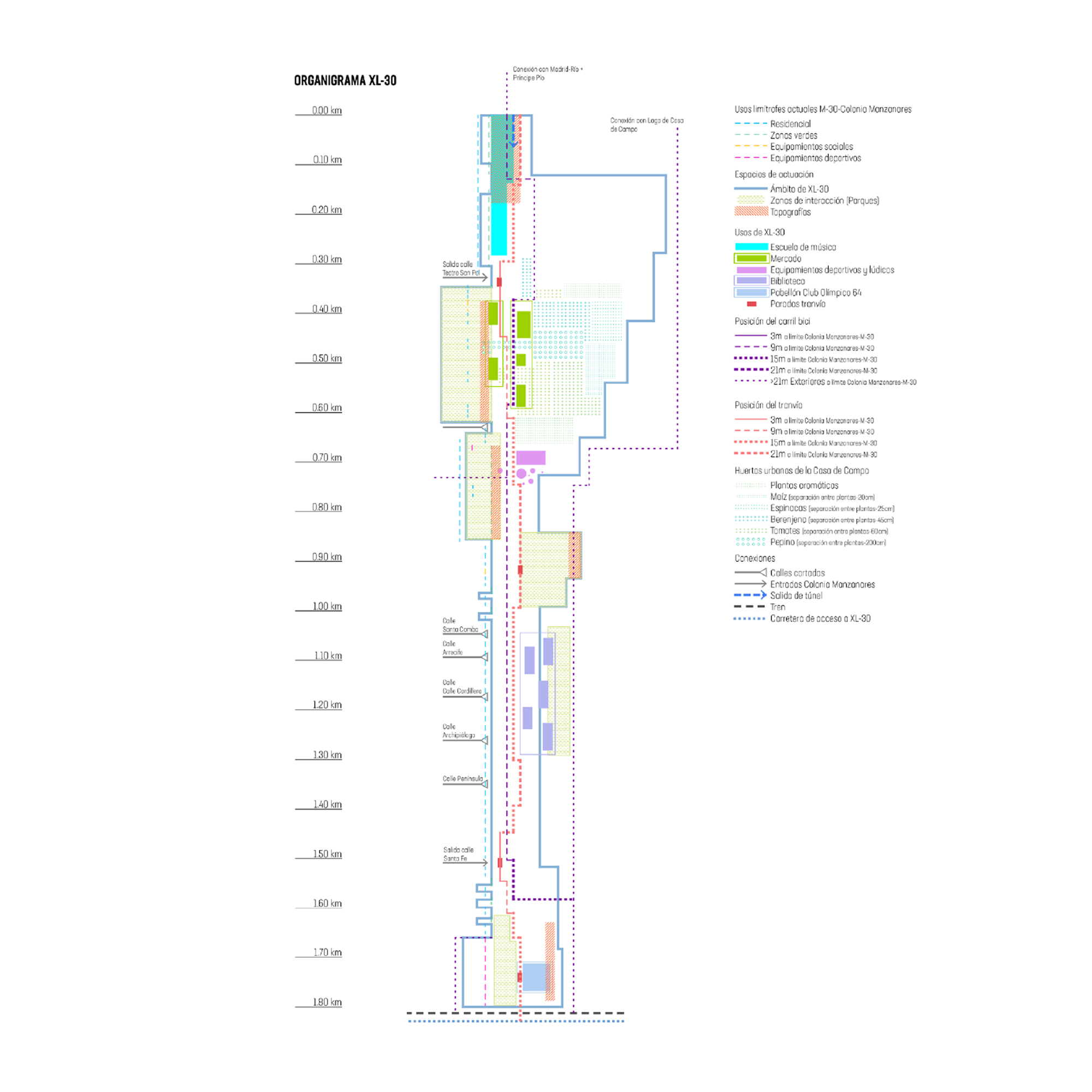
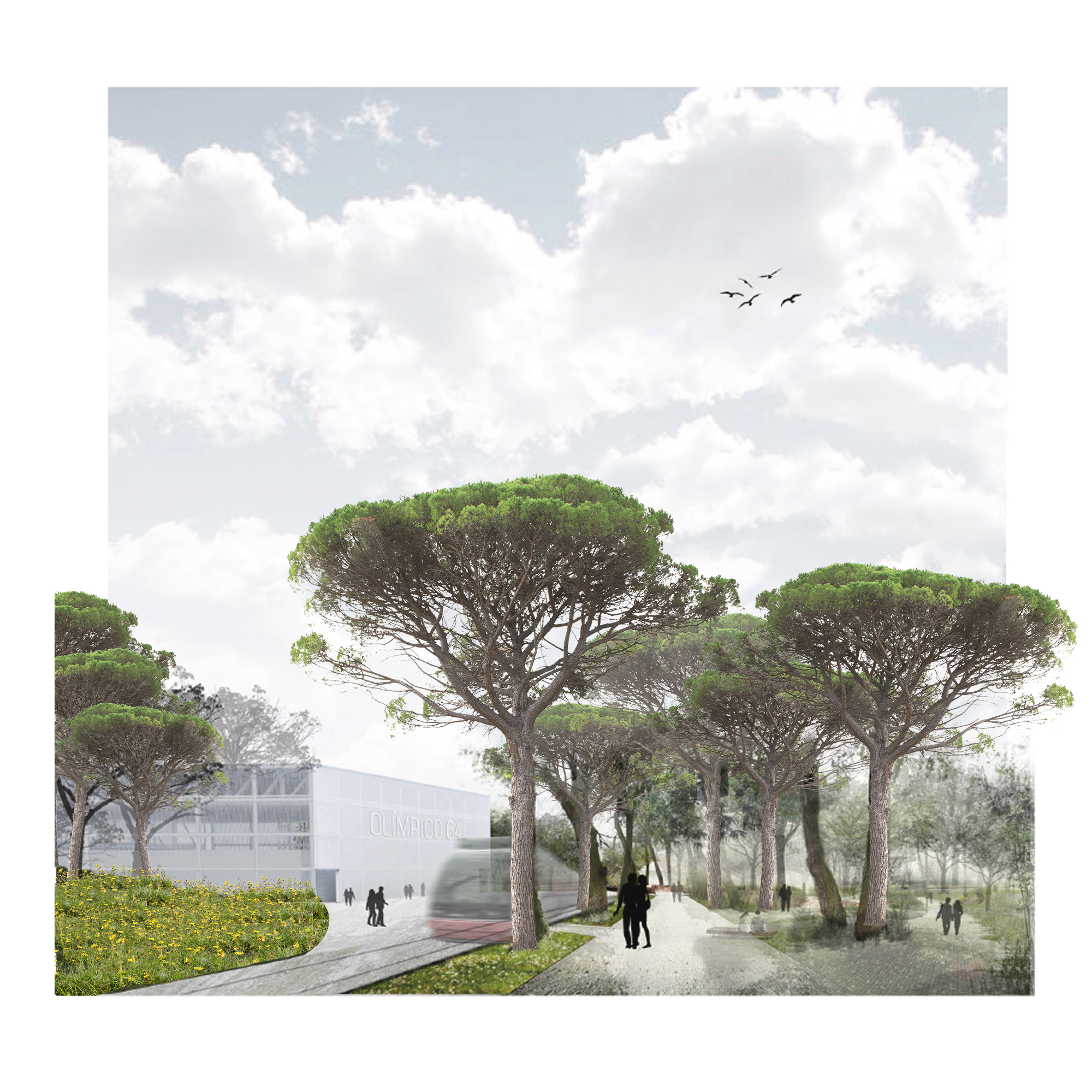
XL30 is a 1.7 km urban intervention along Madrid’s M-30, developed as a response to the environmental and spatial impact of one of the city’s main traffic infrastructures. Noise pollution, fragmented neighborhoods and the dominance of vehicular movement become the starting point for a broader reflection on how large-scale infrastructure can be transformed once the city has grown around it. Rather than treating the M-30 exclusively as a mobility corridor, the project reimagines it as a new urban landscape capable of reconnecting the areas it once divided.
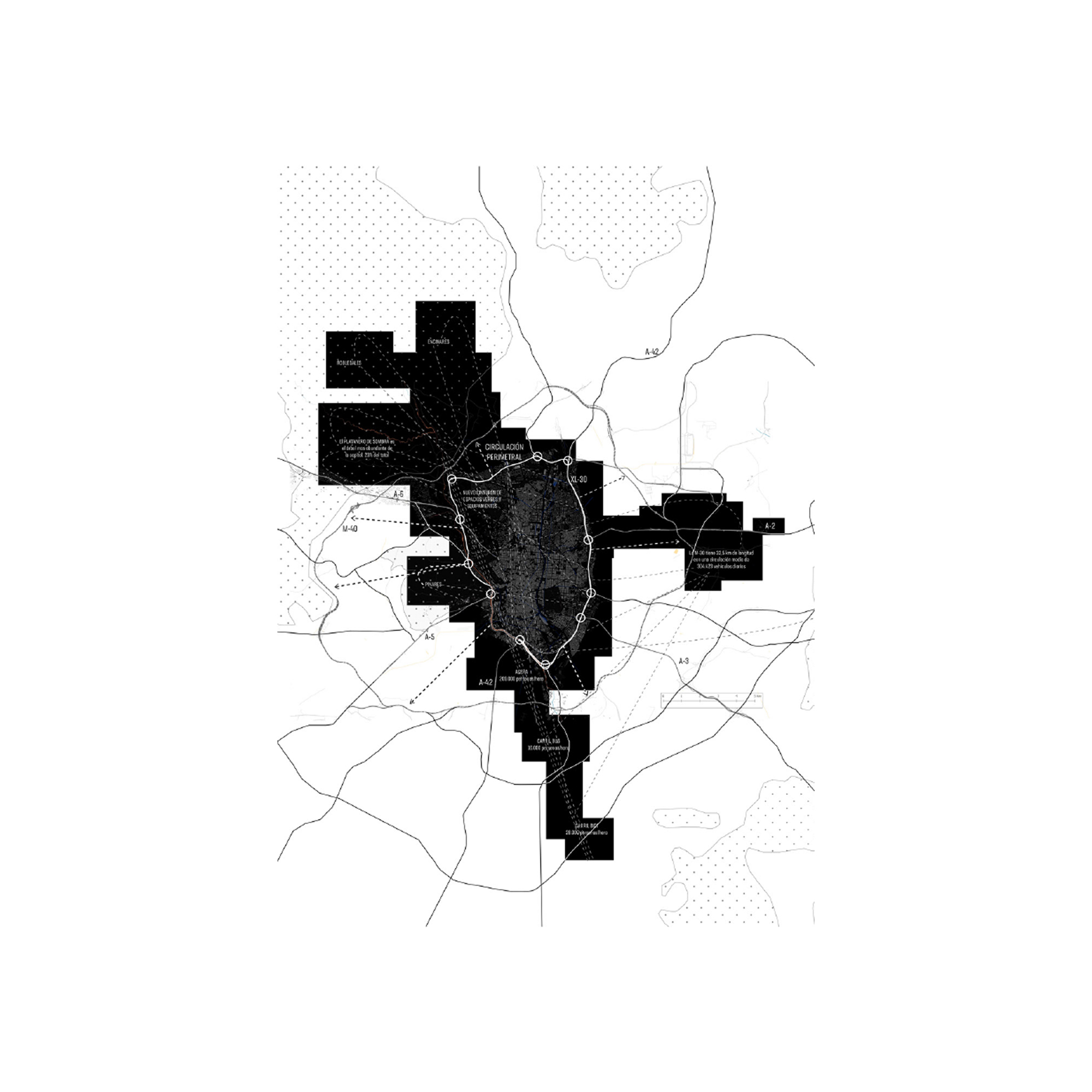
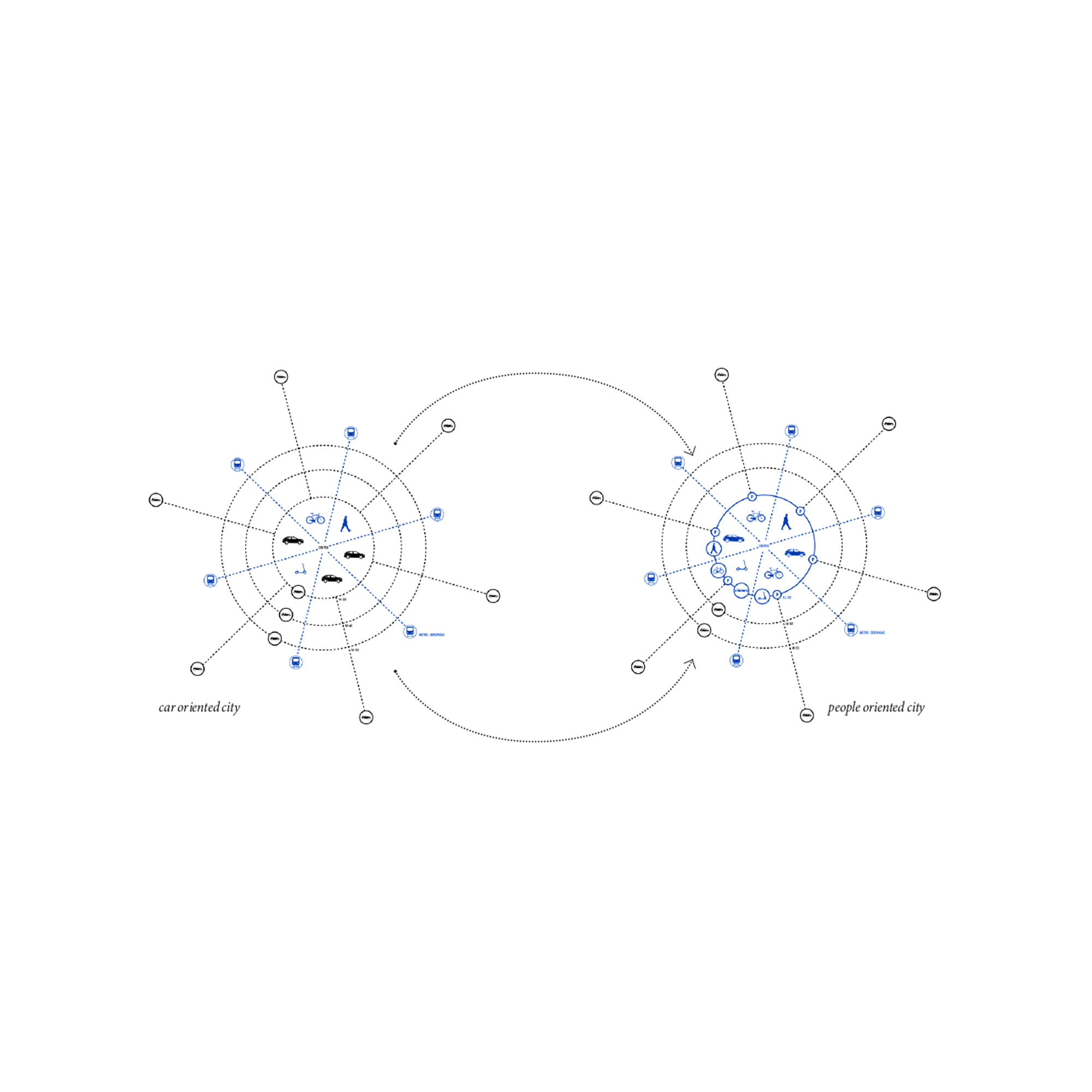
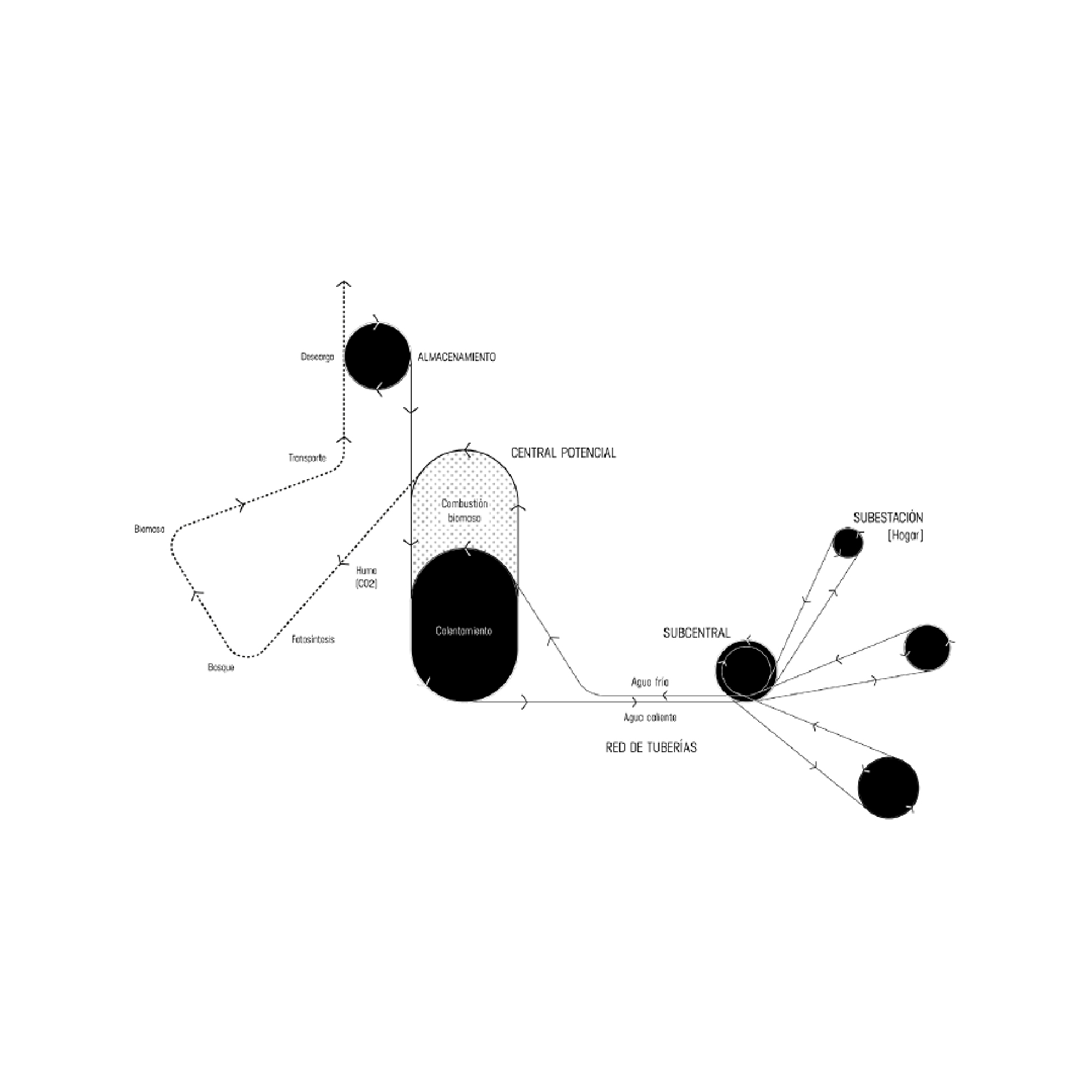
The proposal operates simultaneously at metropolitan, infrastructural and neighborhood scales. At the metropolitan level, traffic is redirected towards the M-40 and new intermodal hubs are introduced, while existing tunnel infrastructure is reconsidered as part of a biomass district-heating network. Mobility, energy and urban regeneration are therefore integrated into a single strategy, shifting the area from a car-oriented condition towards a more sustainable and people-centered urban model.
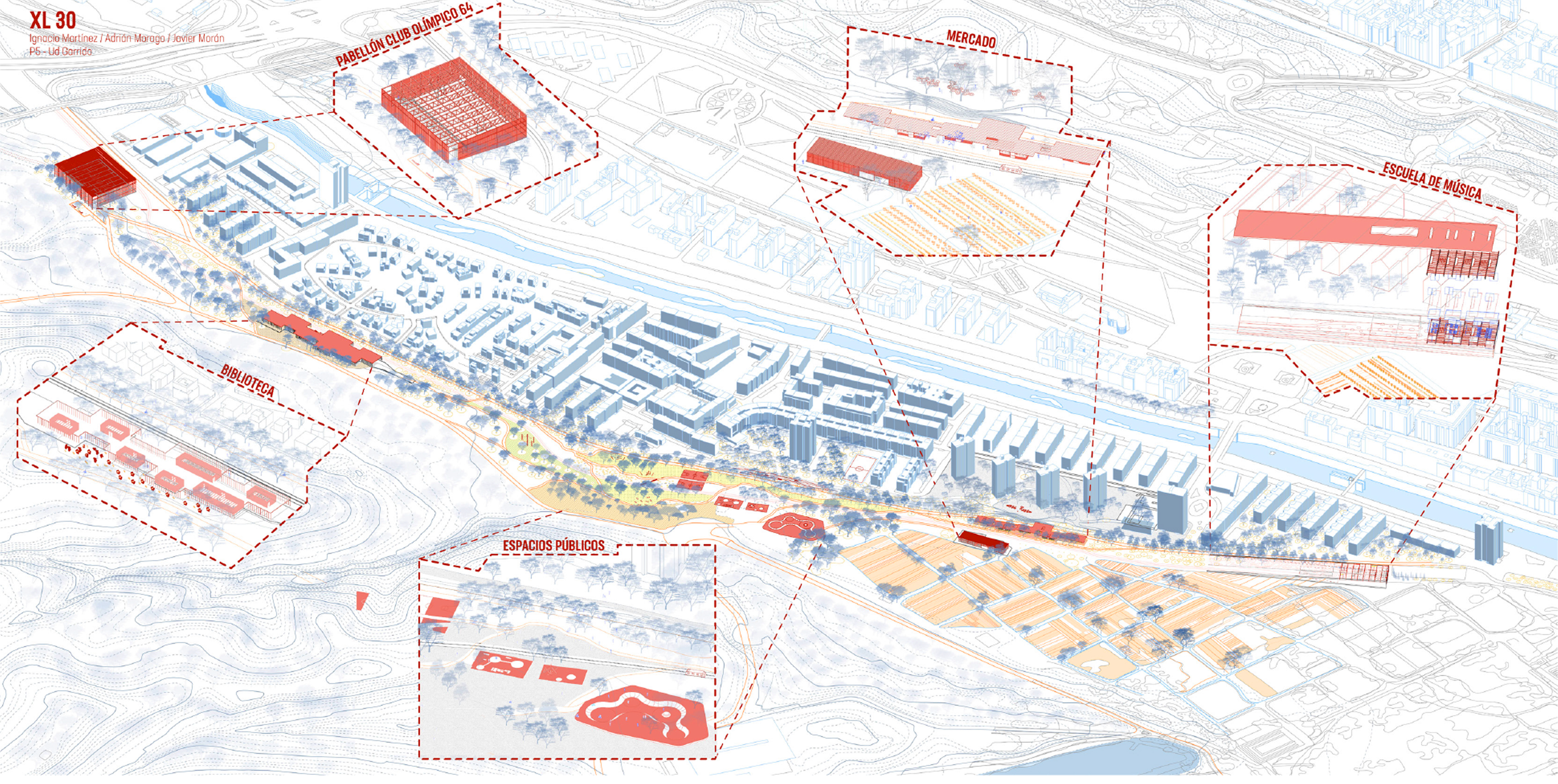
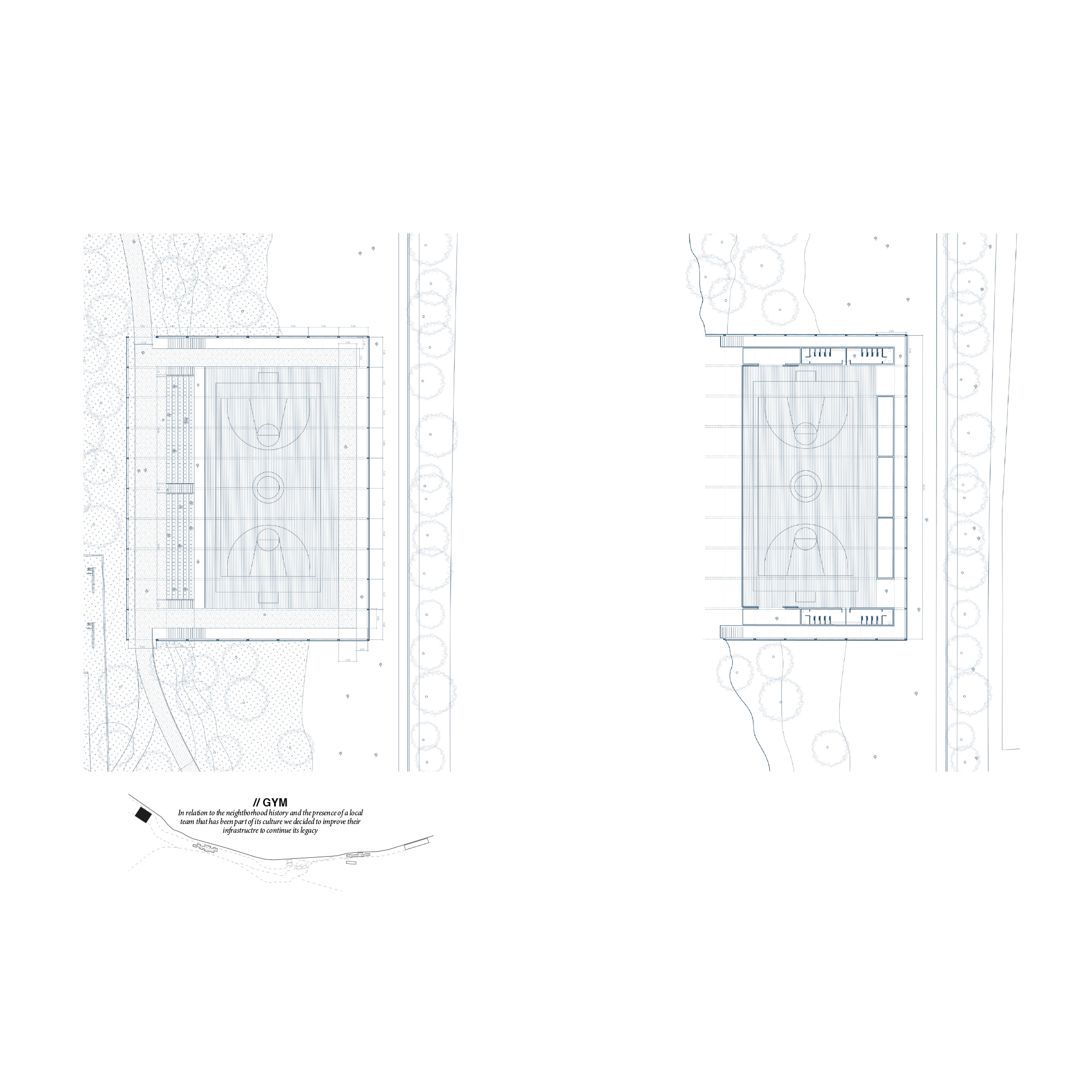
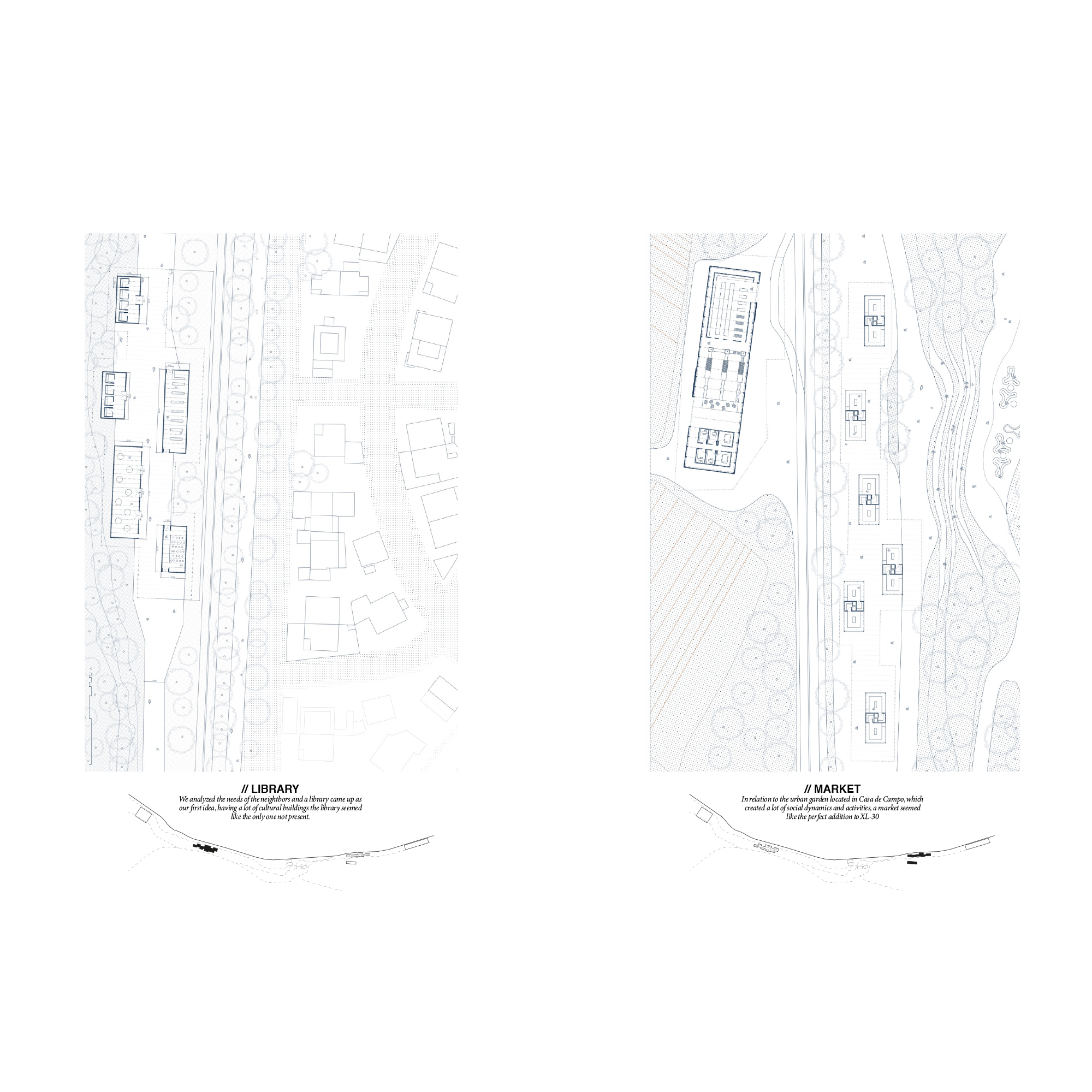
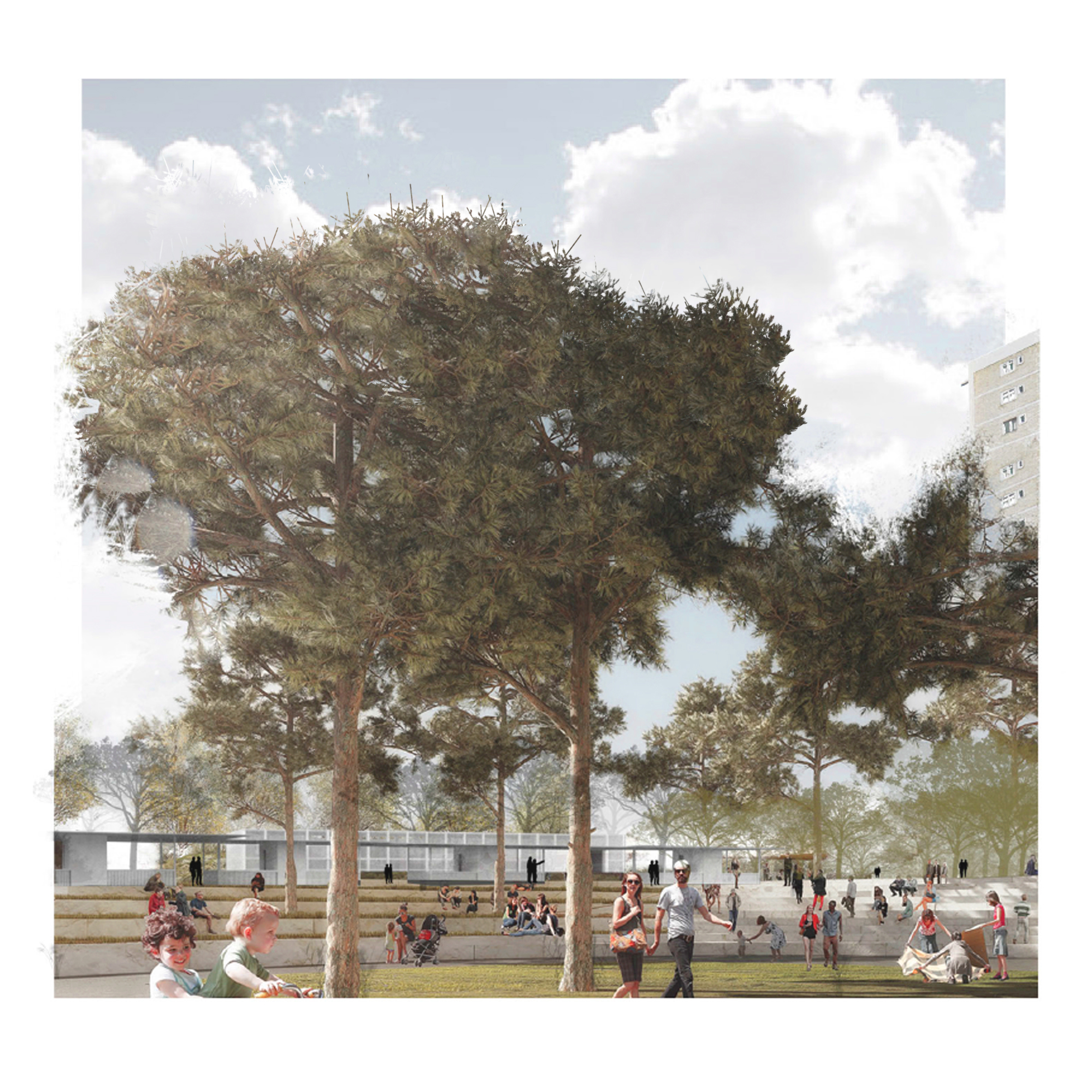
At ground level, the project is conceived as a sequence of superimposed layers. Bicycle paths, parks and urban forests establish a new continuous public landscape, while a series of civic programs—including a basketball hall, library, music academy and market—introduce new centers of activity along the intervention. These buildings are not isolated objects, but part of a larger system in which architecture, landscape and infrastructure work together to reconnect neighborhoods and create new forms of public life. A key objective of XL30 is also to reinforce the relationship between the city and Casa de Campo, extending its natural and recreational qualities into the surrounding residential fabric. Through vegetation, new public spaces and civic programs, the project blurs the boundary between park and city and creates a gradual transition between built fabric and landscape.
Ultimately, XL30 is not about hiding infrastructure, but about changing what infrastructure can mean for the city. What once acted as a barrier becomes a connector; what was dominated by traffic becomes a place for movement, encounter and collective life. The project transforms a piece of metropolitan infrastructure into a new civic landscape, proving that even the most rigid urban systems can become frameworks for a more connected, ecological and public city.