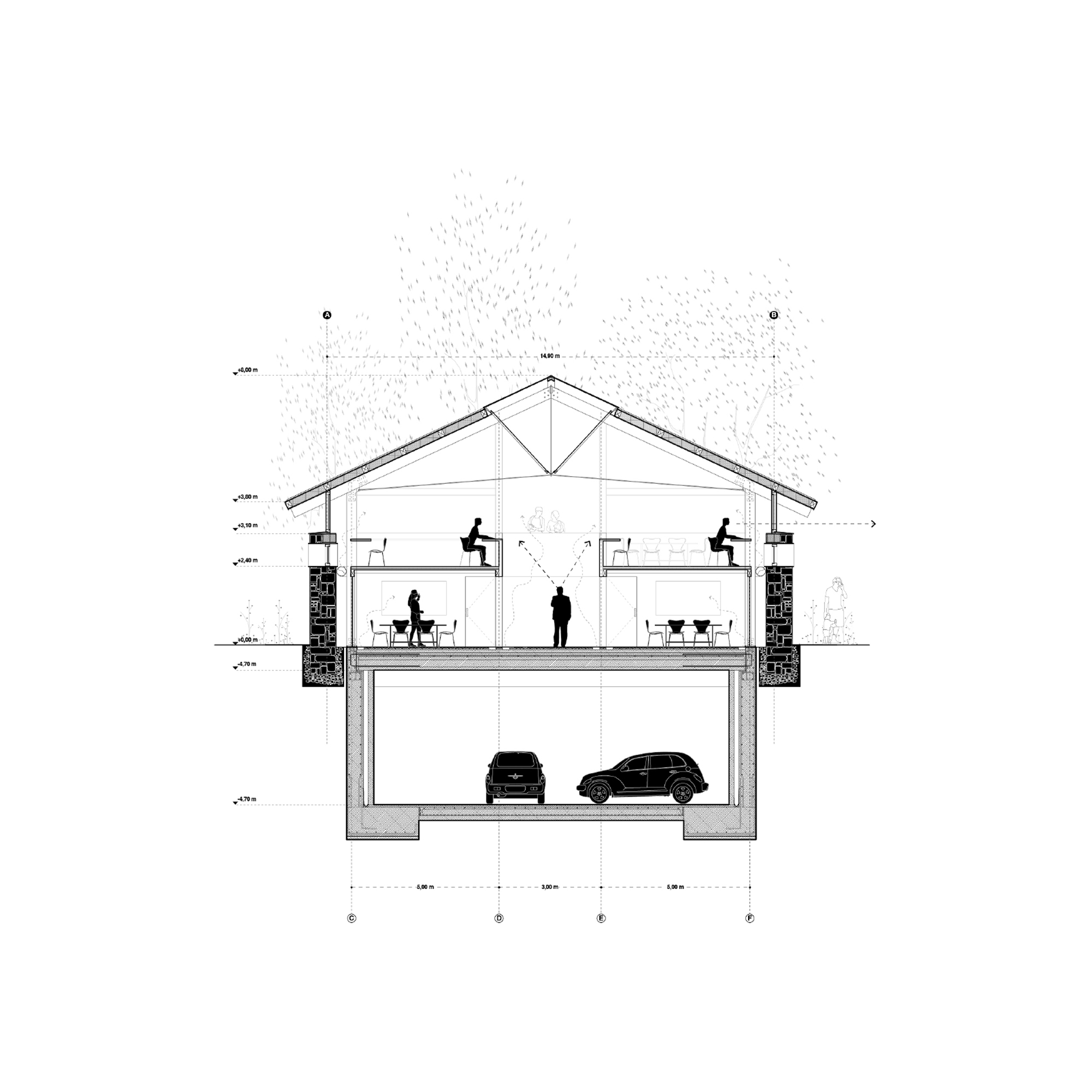
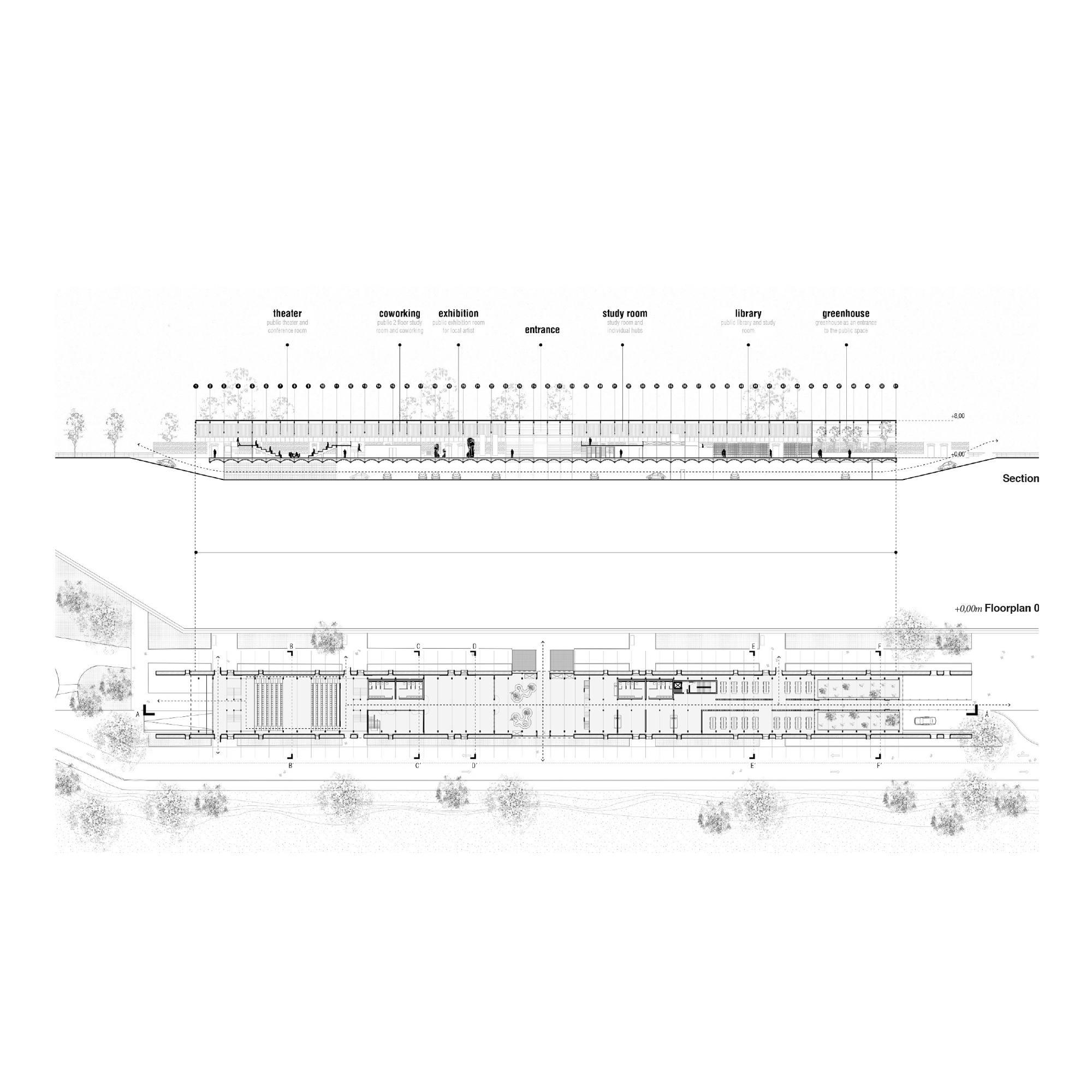
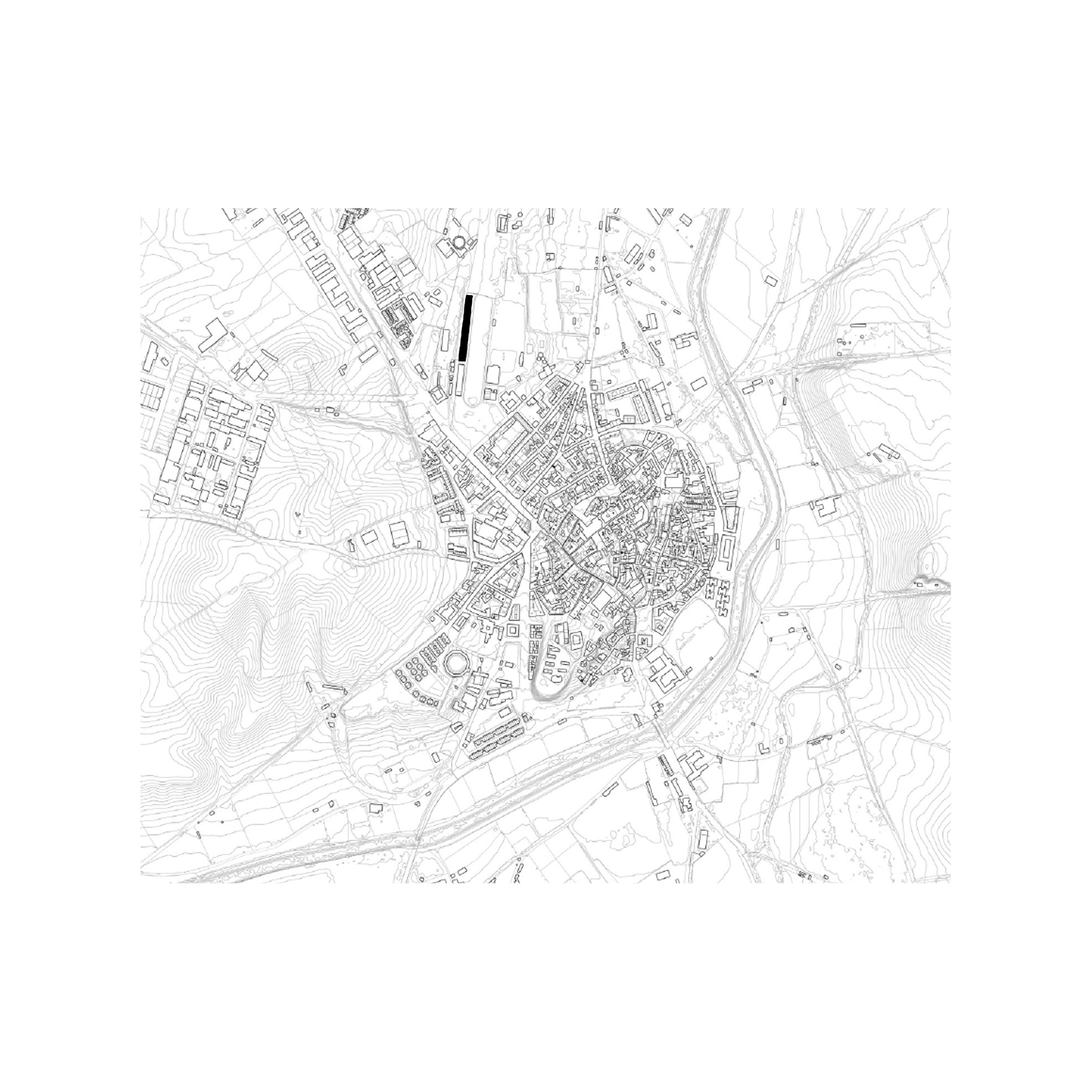
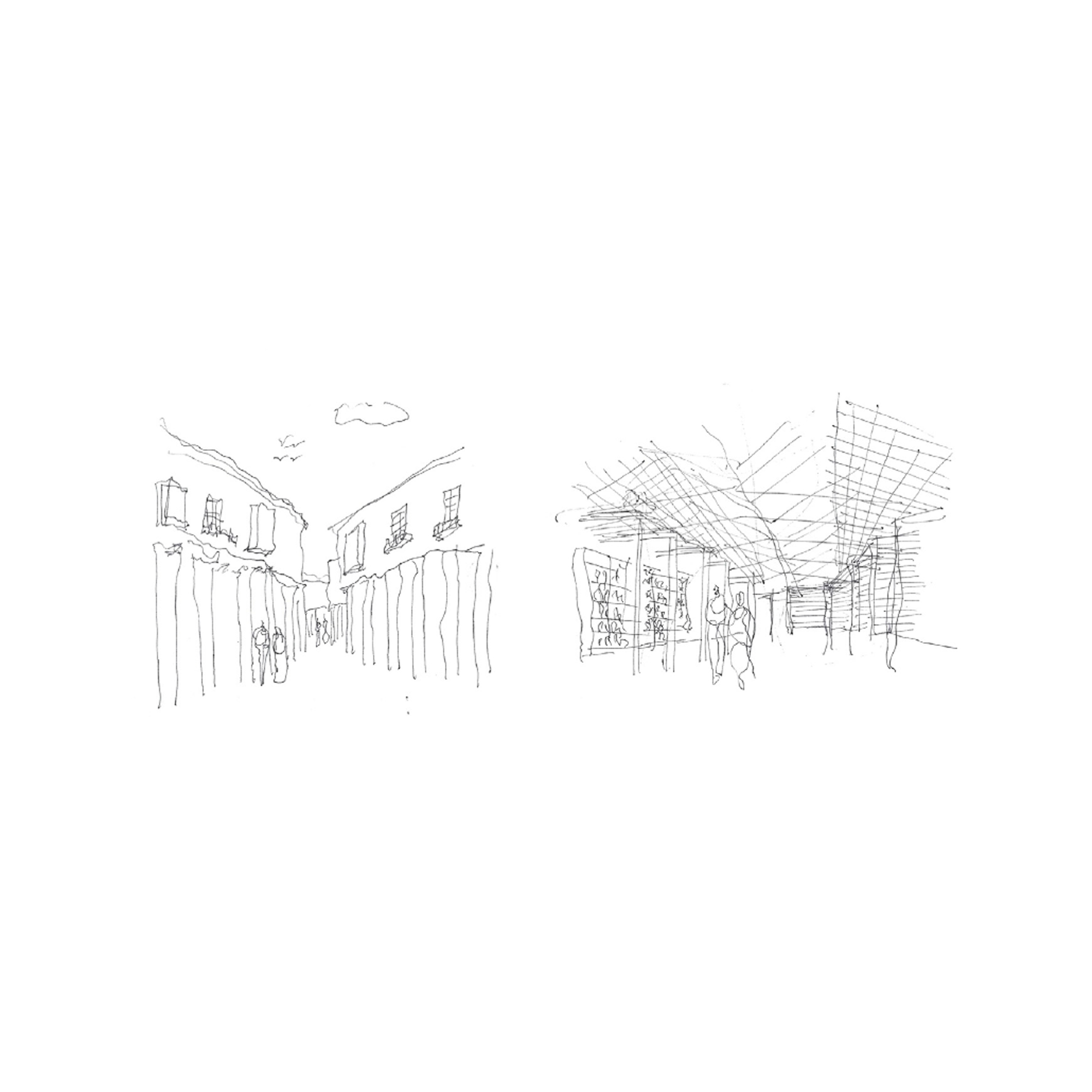
Urban Rehab transforms a former agricultural storage building in Medina de Rioseco into a new civic and cultural hub. The original structure, approximately 150 meters long and 15 meters wide, is understood not simply as a building to be refurbished, but as a linear piece of urban fabric: an interior street capable of accommodating movement, encounter and a sequence of public spaces.
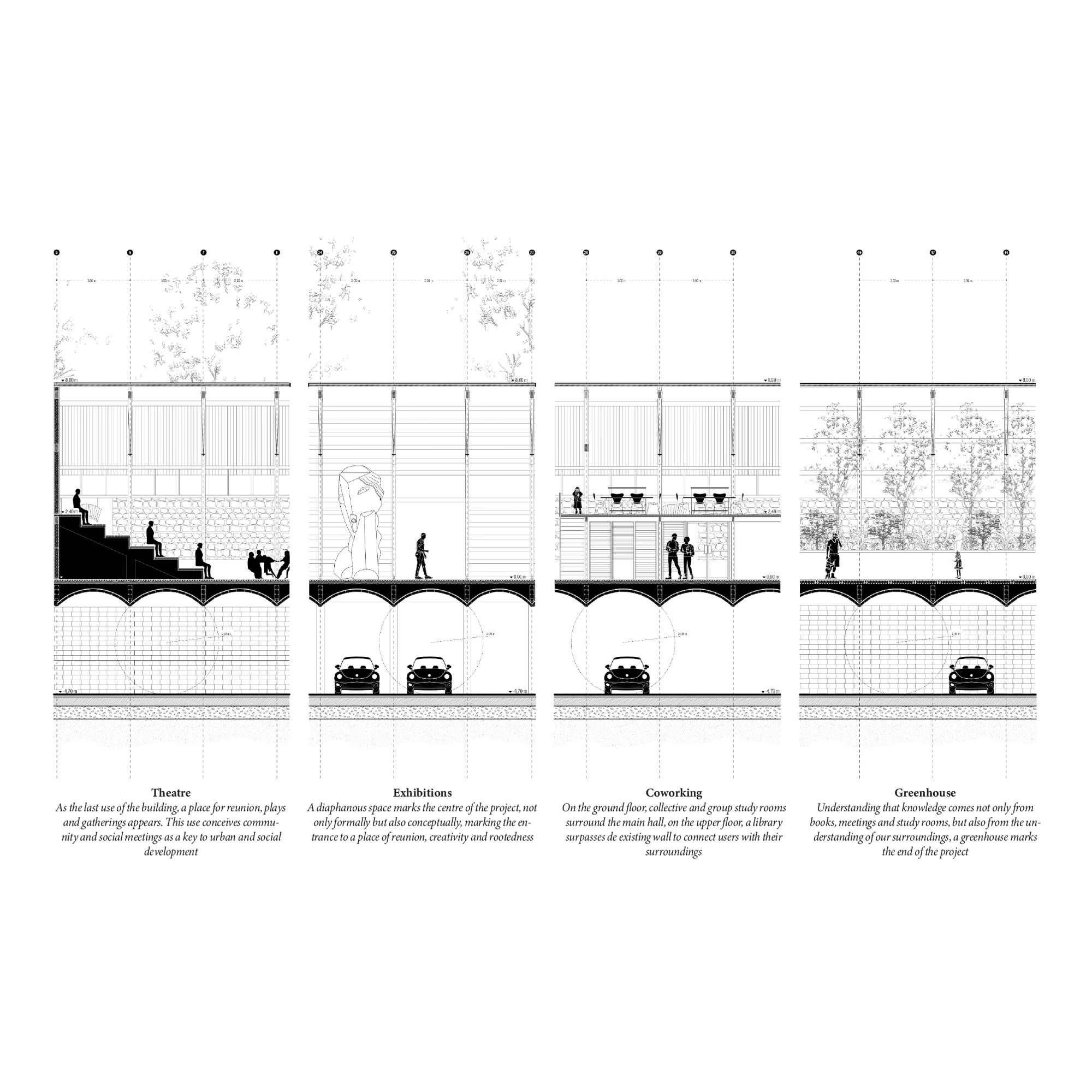
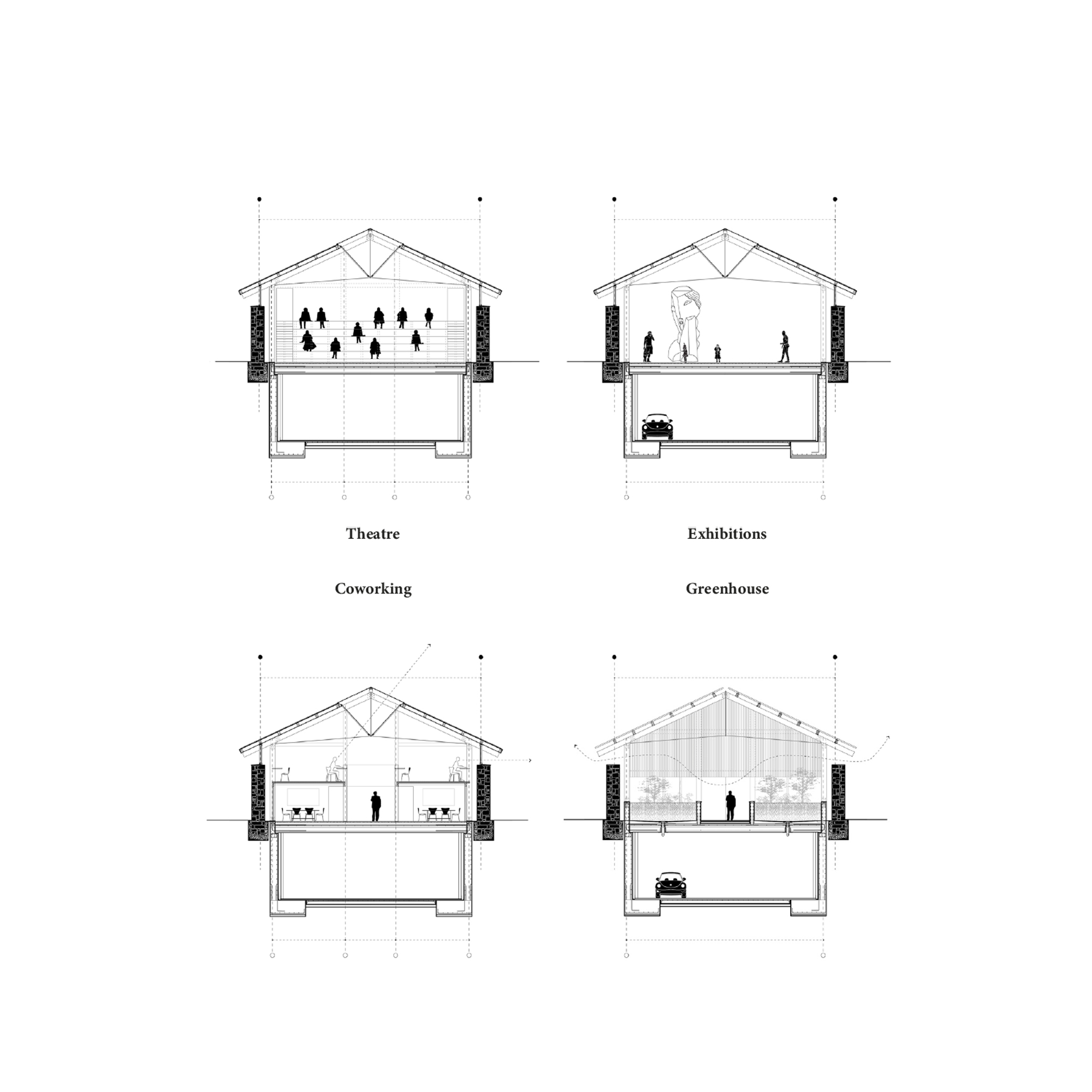
The intervention introduces a diverse programme of collective uses, including a library, coworking spaces, exhibition areas, a theatre and a greenhouse. Rather than distributing these functions as isolated rooms, the project organizes them along a continuous spatial sequence in which open areas, thresholds and interior plazas act as points of social intensity. The building becomes a framework for different forms of occupation, from gathering and performance to study, work and contemplation.
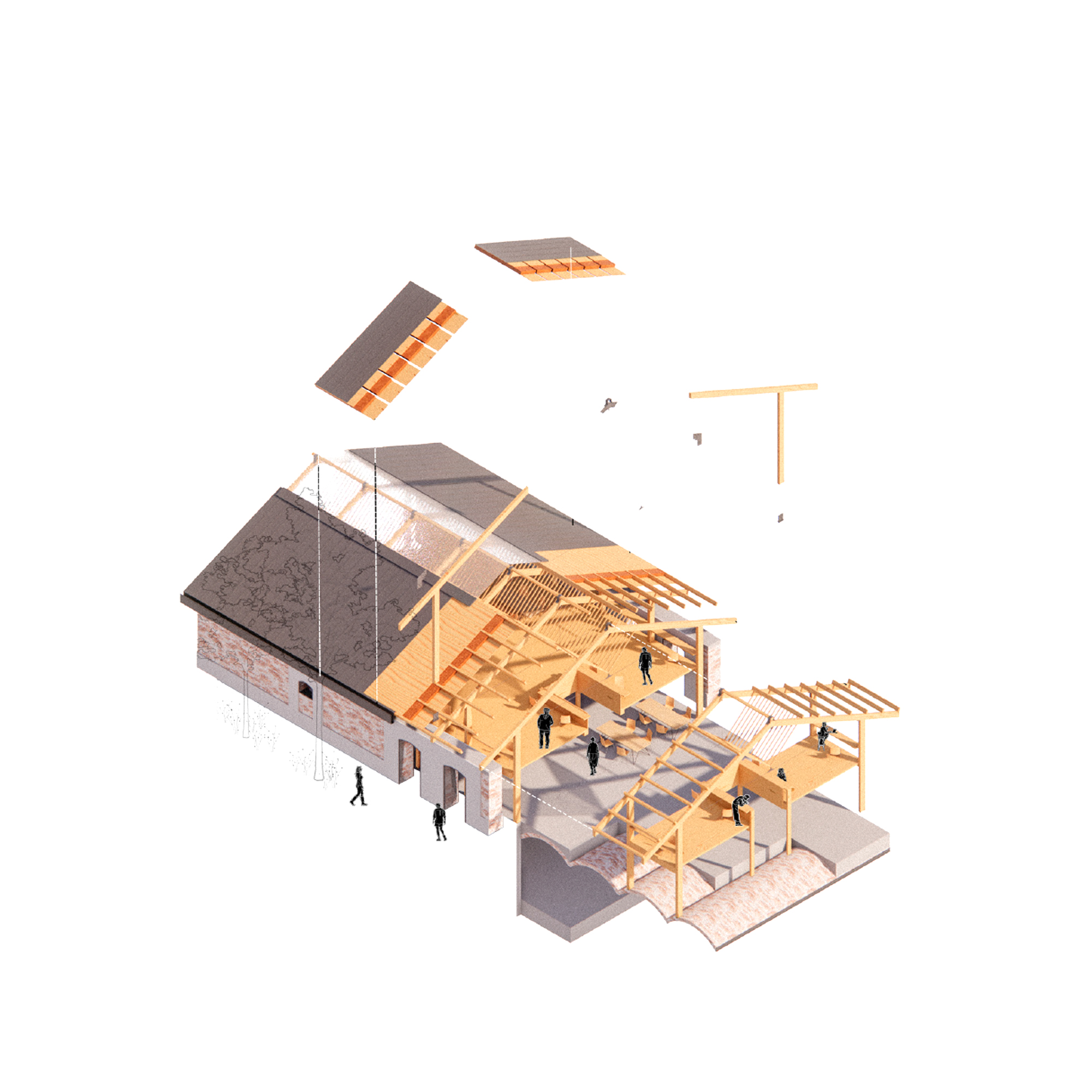
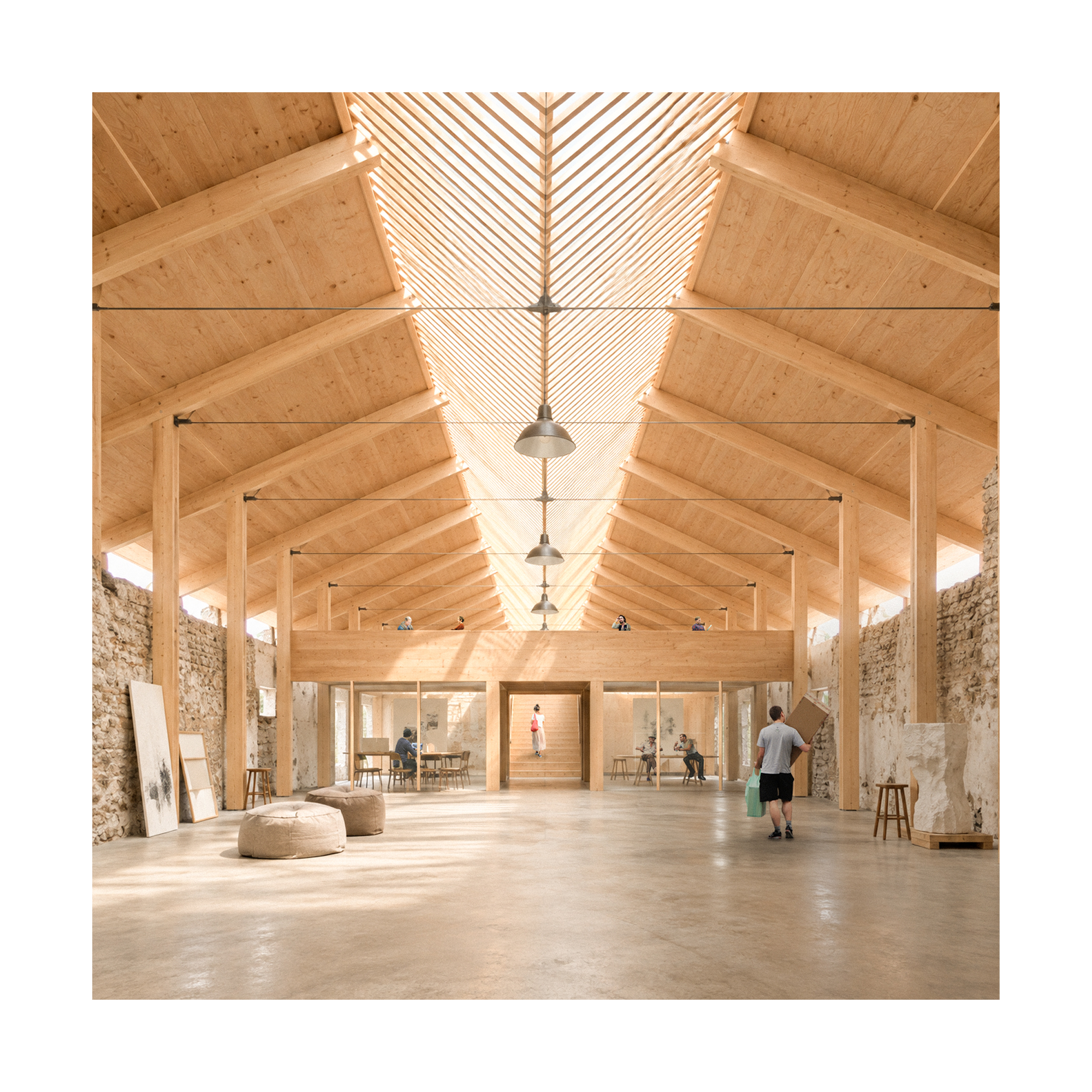
Through a single constructive operation, the project accommodates the multiplicity of programmes and degrees of privacy unfolding along the entire building. From collective spaces such as the auditorium and exhibition areas to more enclosed environments such as study rooms and libraries, the system adapts to different spatial requirements while maintaining a coherent architectural language and a continuous dialogue with the existing structure.
The proposal deliberately preserves the identity of the former warehouse, allowing the new intervention to coexist with the traces, proportions and material presence of the original building. Instead of erasing its agricultural past, Urban Rehab uses it as the foundation for a new layer of public life, where reuse becomes both an architectural and social strategy.
Ultimately, Urban Rehab is conceived as an act of urban reactivation rather than simple restoration. A structure once dedicated to storage is transformed into an infrastructure for knowledge, culture and encounter. By turning a long, obsolete building into an inhabited street, the project gives existing architecture a second life—not by freezing its past, but by making it capable of supporting new forms of collective life.