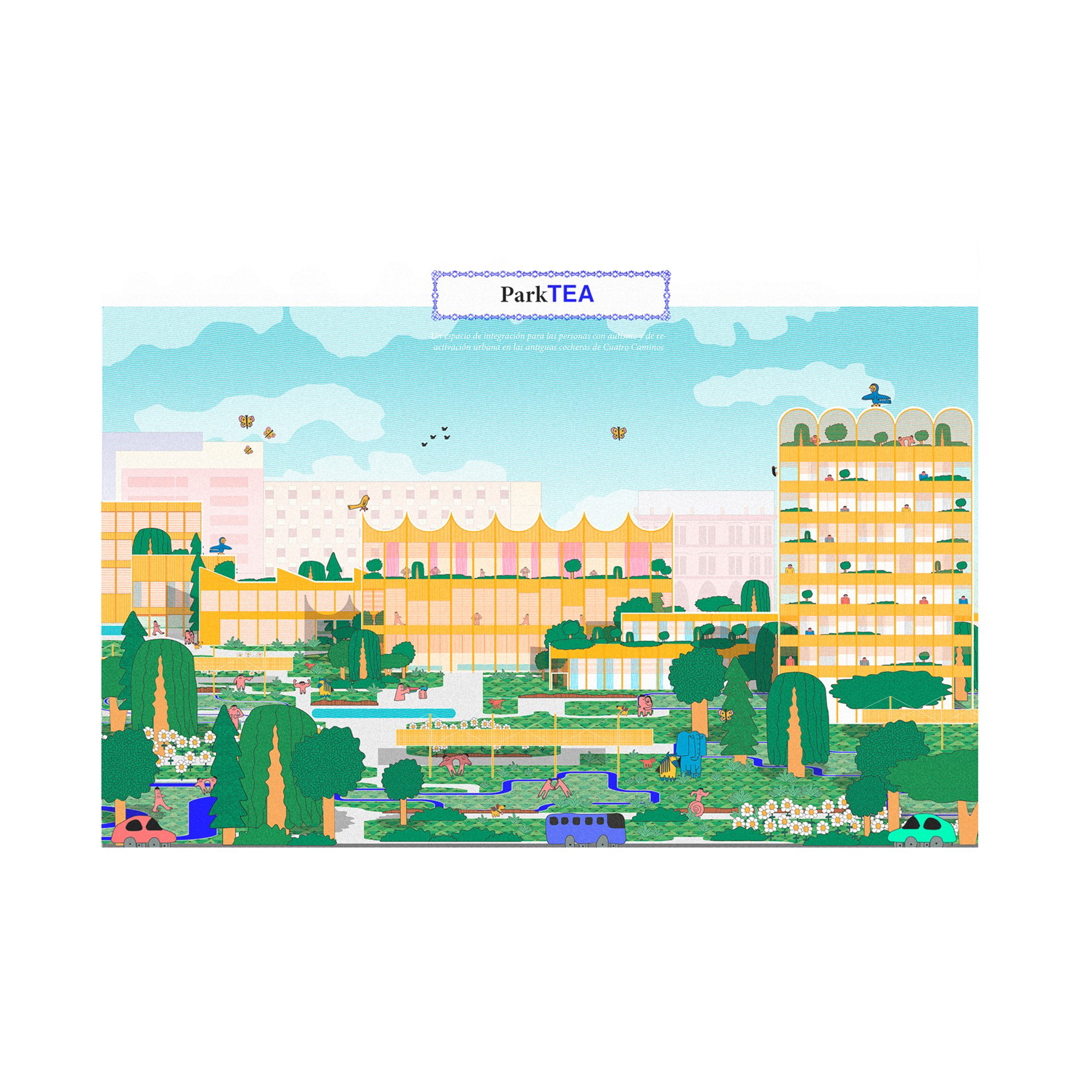
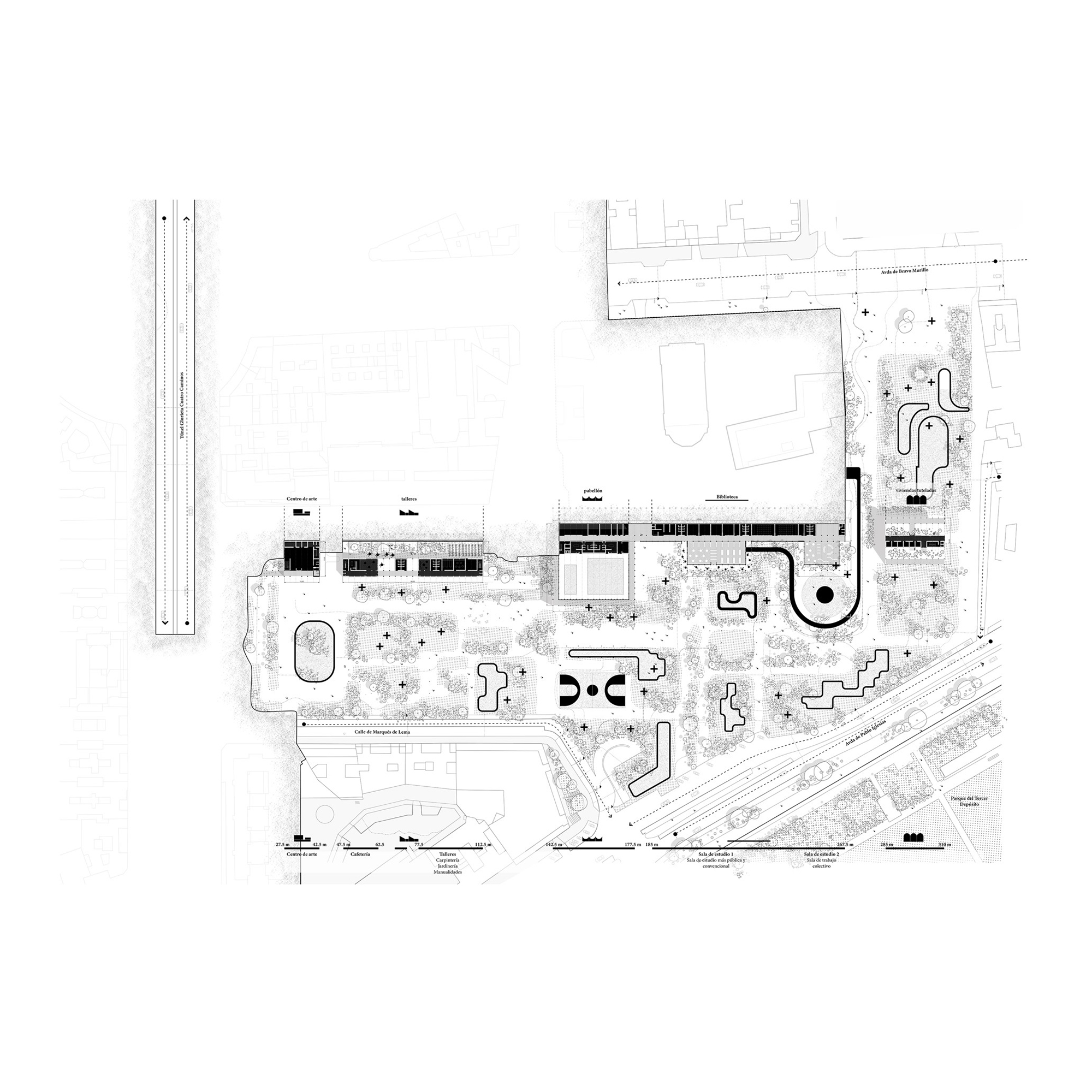
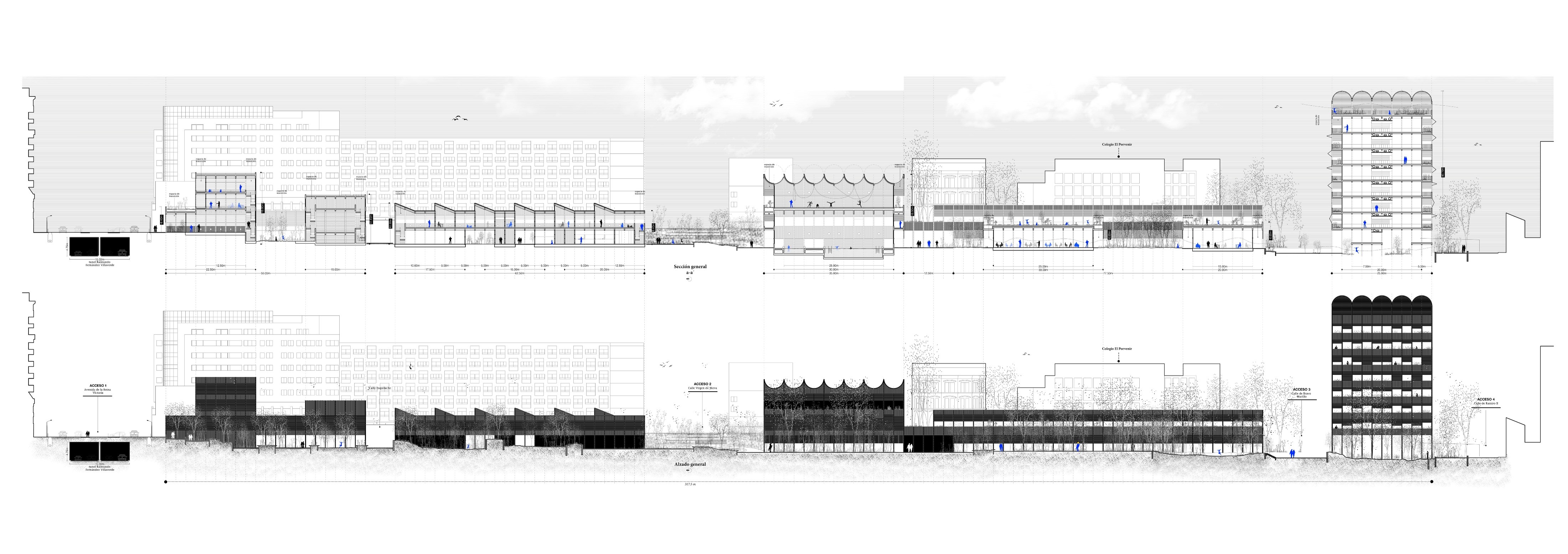
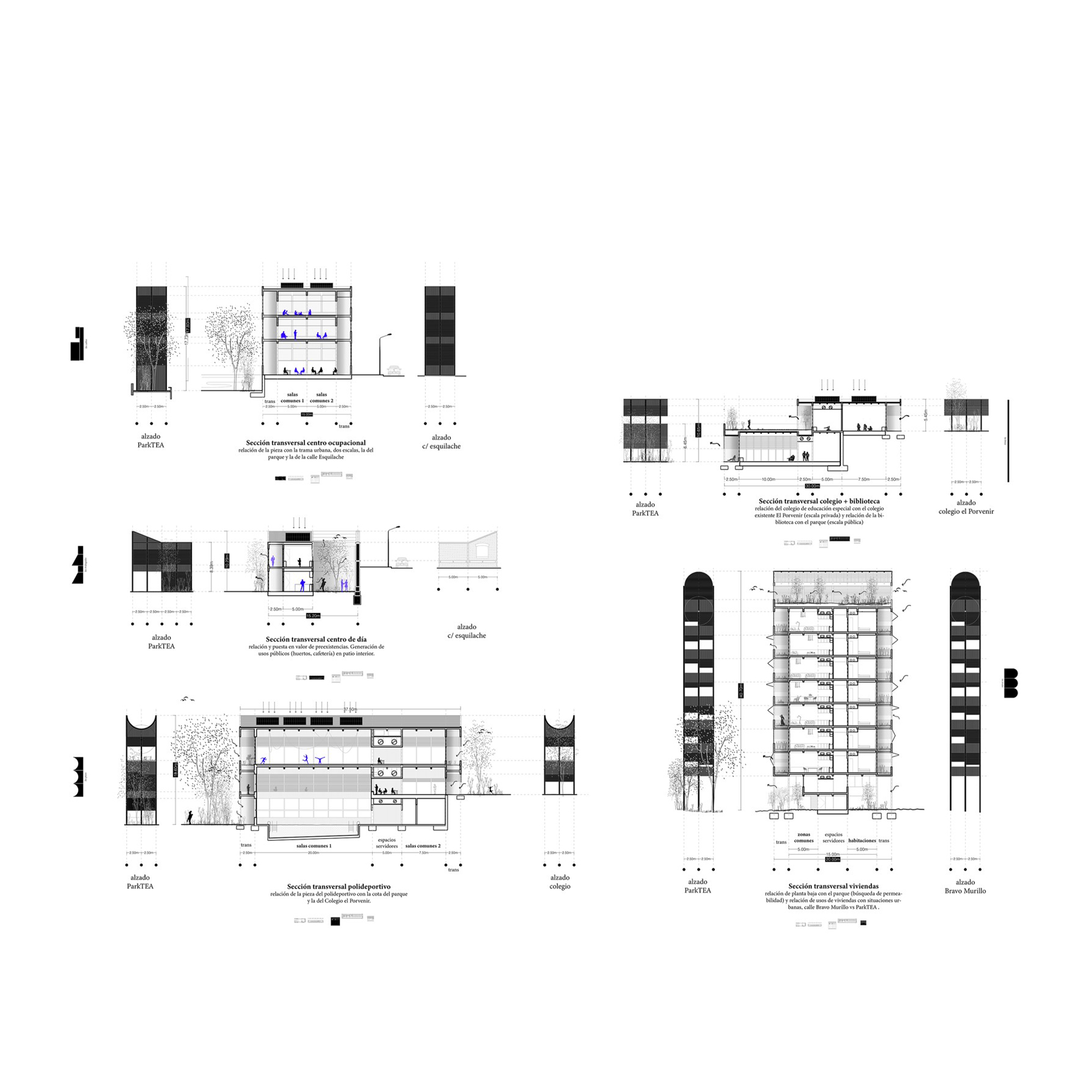
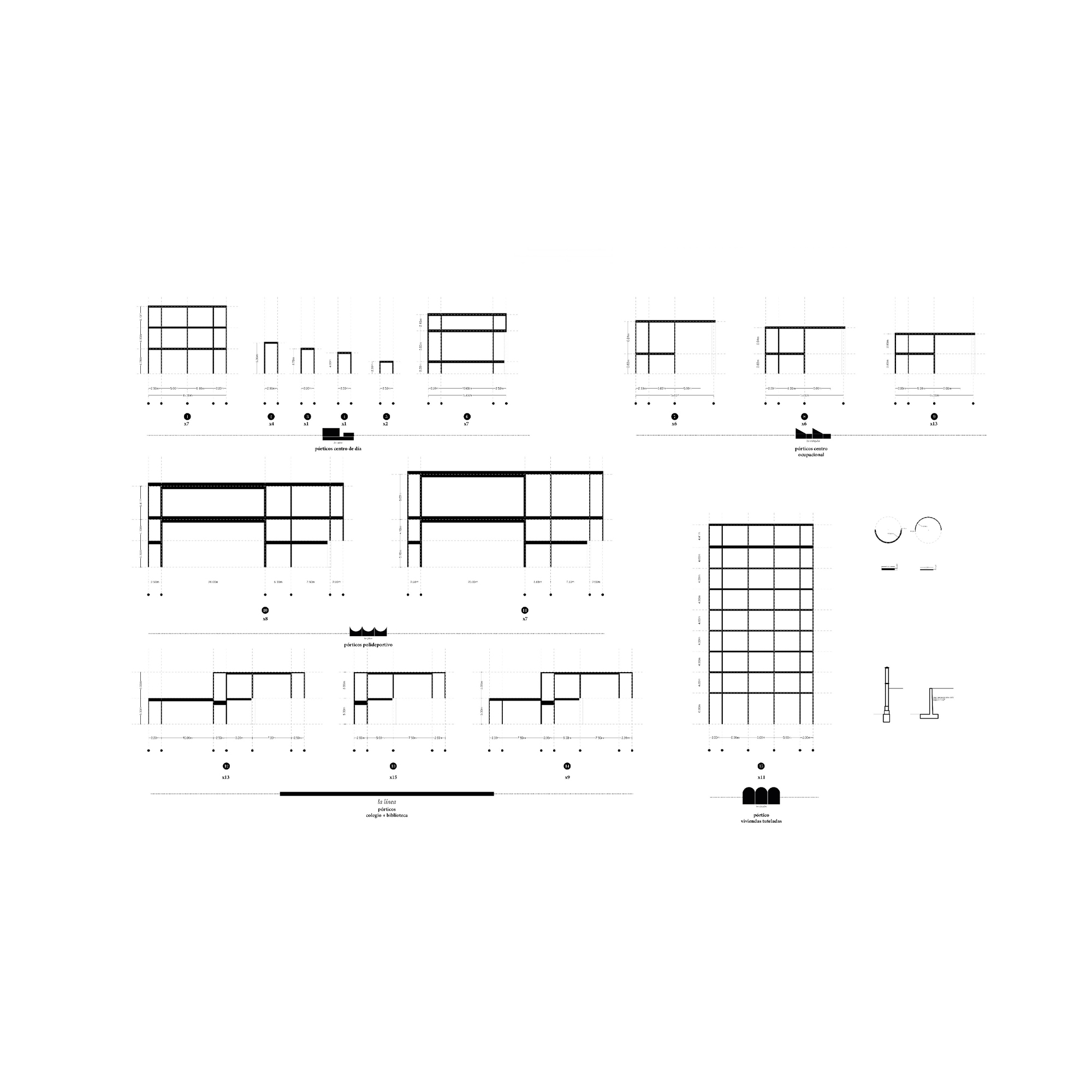
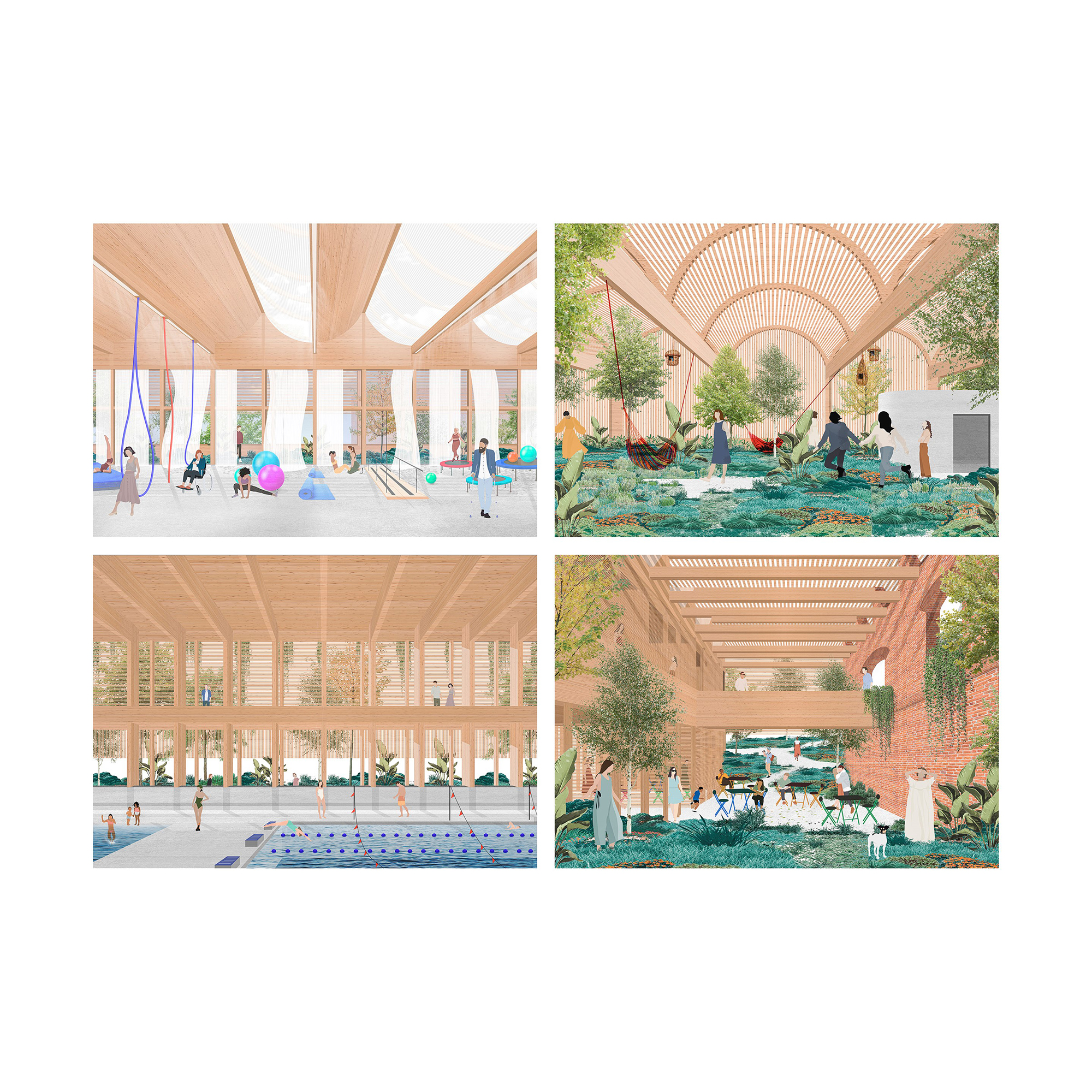
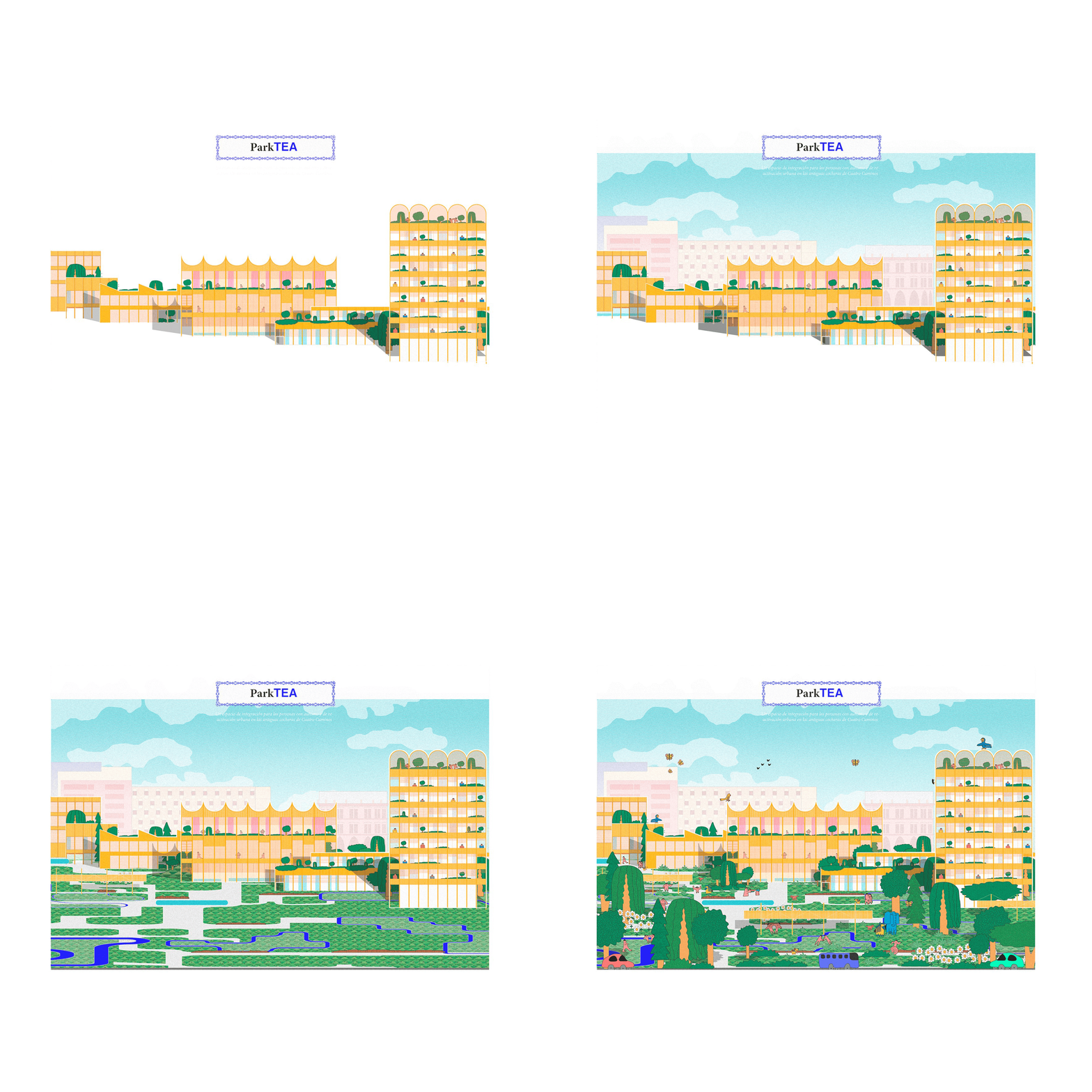
ParkTEA emerges from a social, urban and architectural question: how can the city integrate people with Autism Spectrum Disorder and their families without relegating them to isolated, peripheral or disconnected spaces, separated from collective life? The project starts from the recognition that exclusion is not produced only by a lack of resources or support, but also by the way the city organises its facilities, care spaces and opportunities for participation.
Many programmes related to disability and neurodiversity have historically been conceived through closed welfare-based logics, located in environments that are either insufficiently complex or weakly connected to the social, cultural and economic dynamics of the city. ParkTEA proposes a shift in perspective: to understand care as an urban issue and architecture as a tool capable of building bonds, autonomy and belonging.
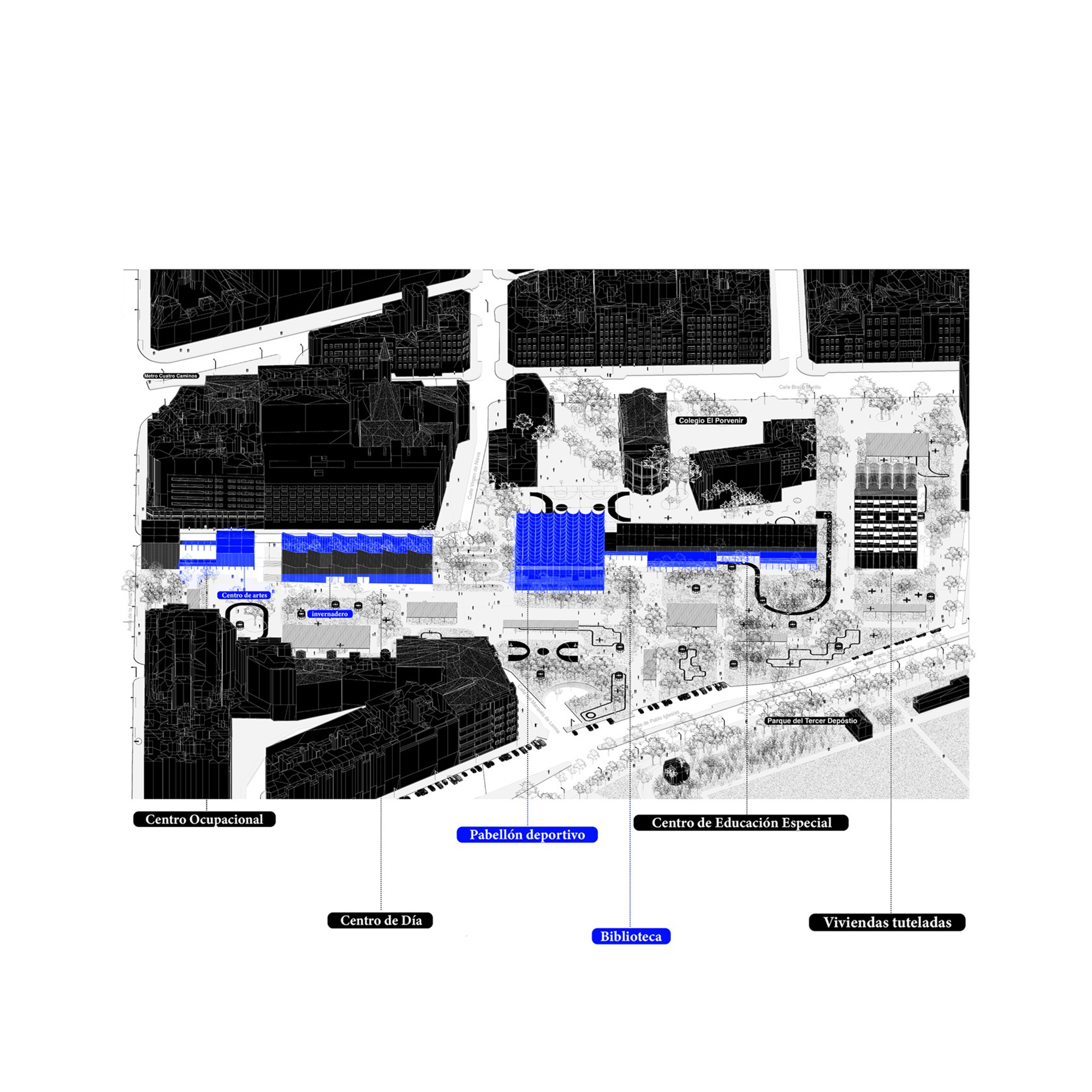
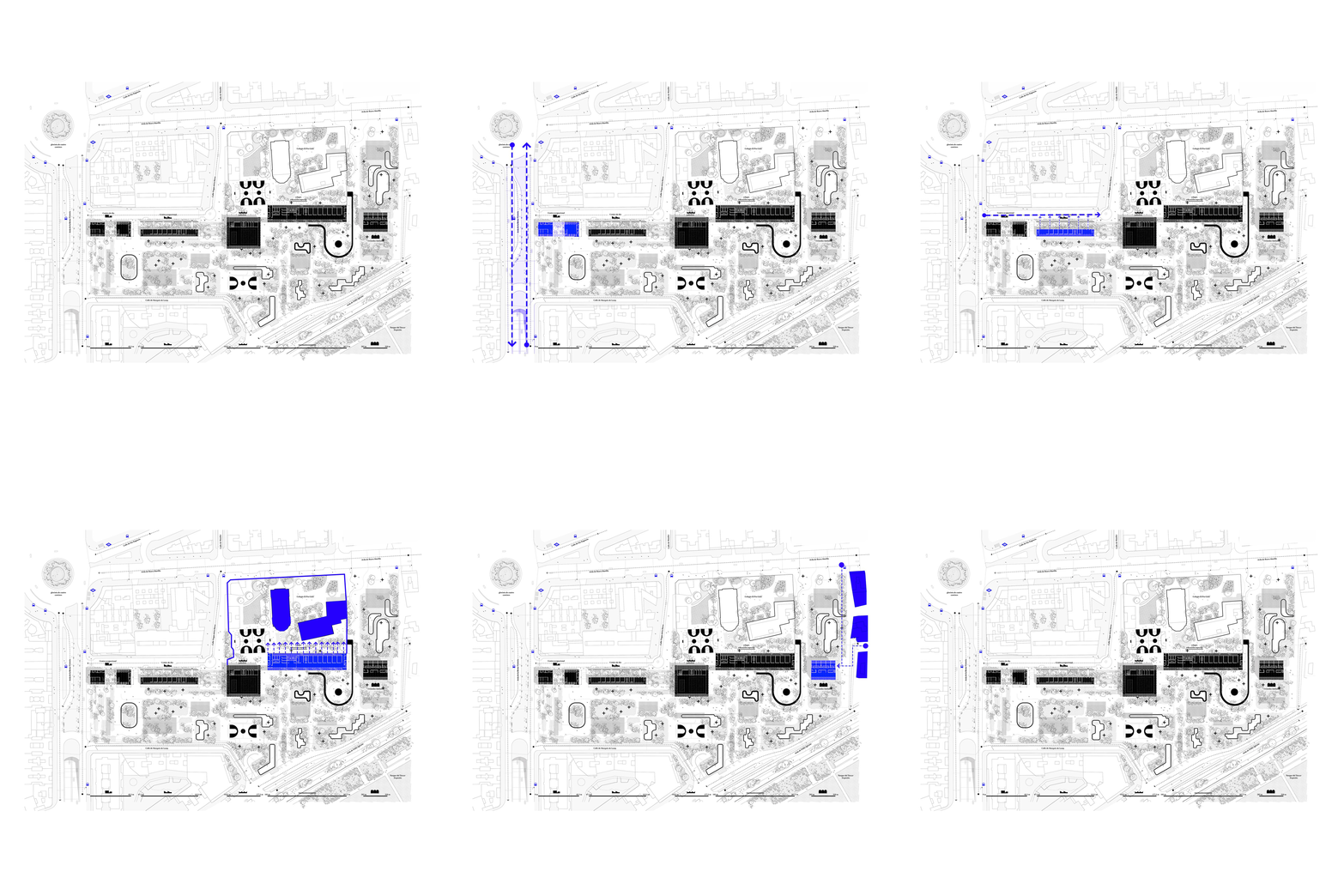
The project does not simply propose a set of specialised spaces for people with autism, but rather a model of progressive integration between protection and participation. Its aim is to generate an architecture capable of accompanying without segregating, protecting without isolating, and including without overexposing; an architecture that responds to the specific needs of ASD while also enabling active participation in the everyday life of the neighbourhood.
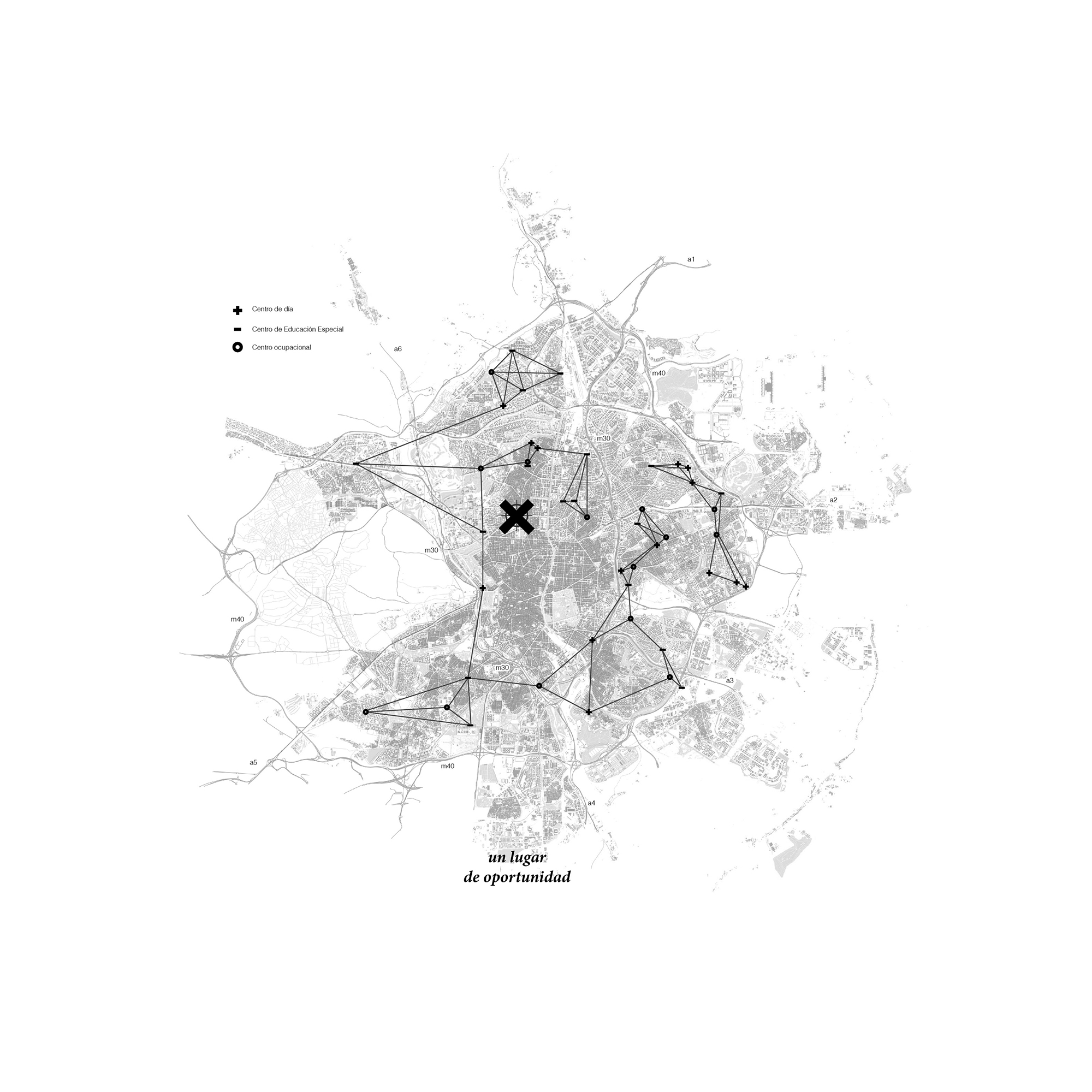
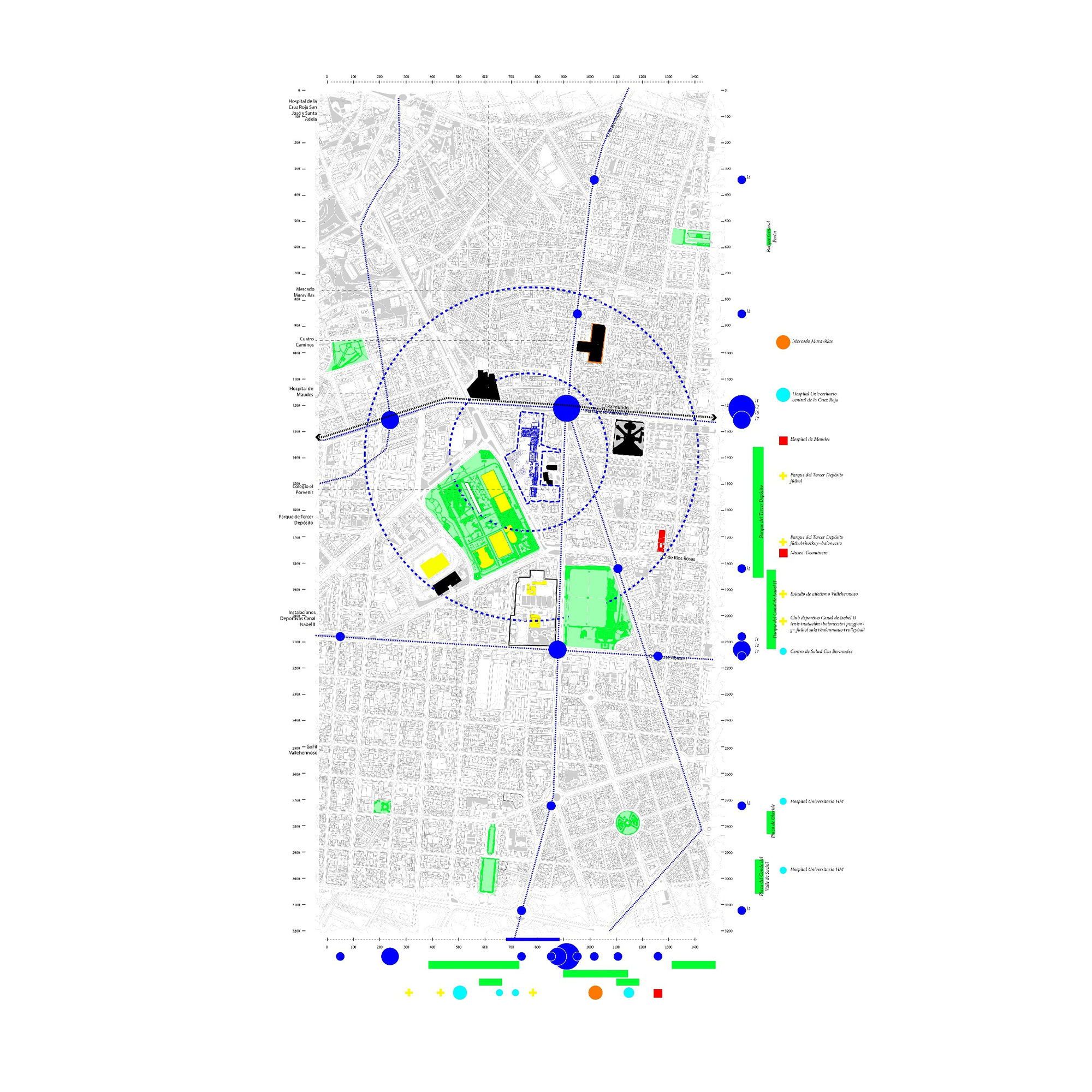
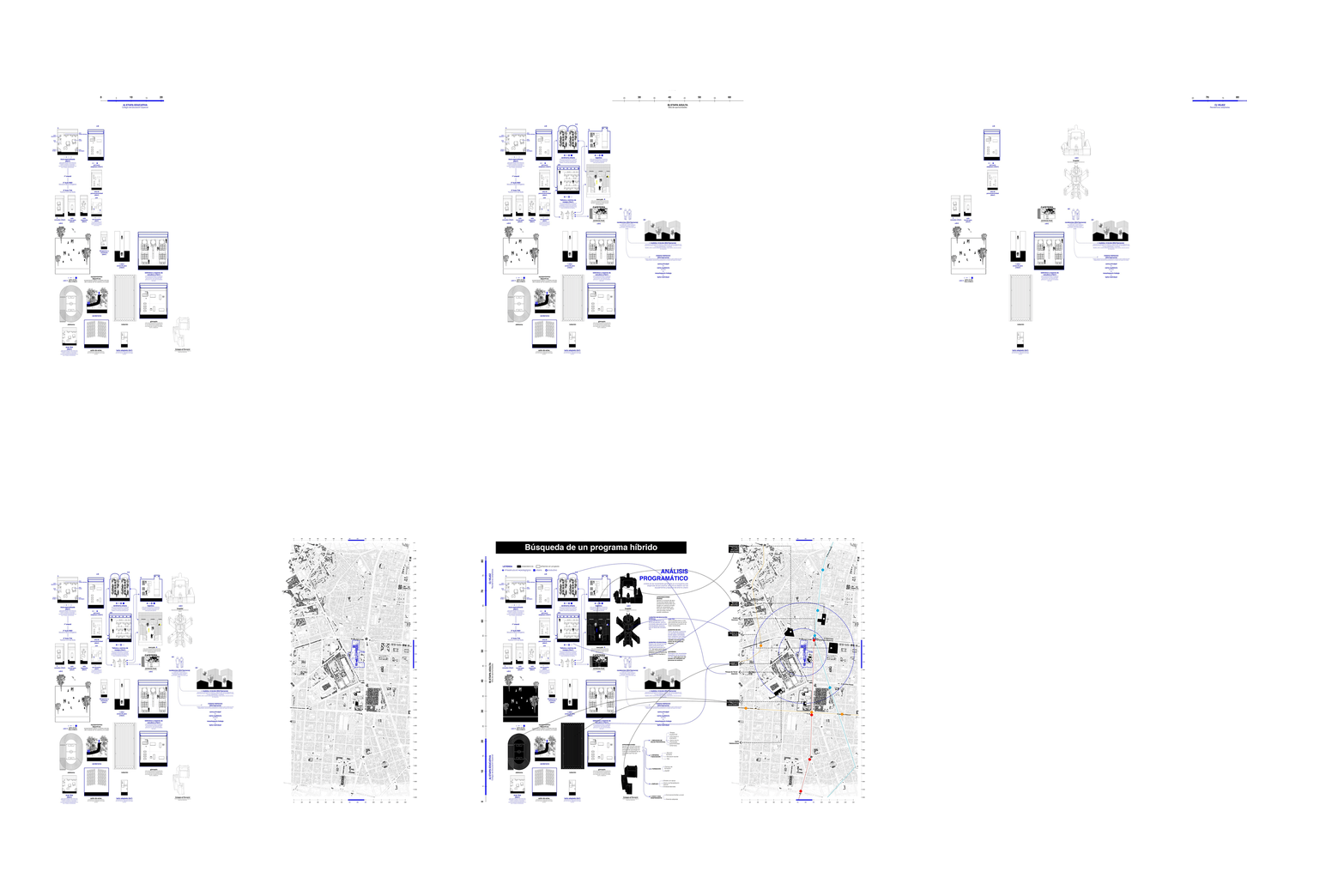
Cuatro Caminos appears as a place of opportunity due to its centrality, accessibility, mix of uses, public transport, local commerce, and the presence of educational, healthcare, social and cultural facilities. Its urban complexity makes it possible to imagine an ASD programme connected to real networks of proximity, exchange and collective activity.
Alongside this urban condition, the historical value of the former Cuatro Caminos depot adds another layer of meaning. As a fundamental infrastructure in the material memory of Madrid and its immediate surroundings, the project does not understand this site as an available void, but as a support charged with identity. In this way, what was once a symbol of progress, infrastructure and movement is now transformed into a driver of care, community and participation.
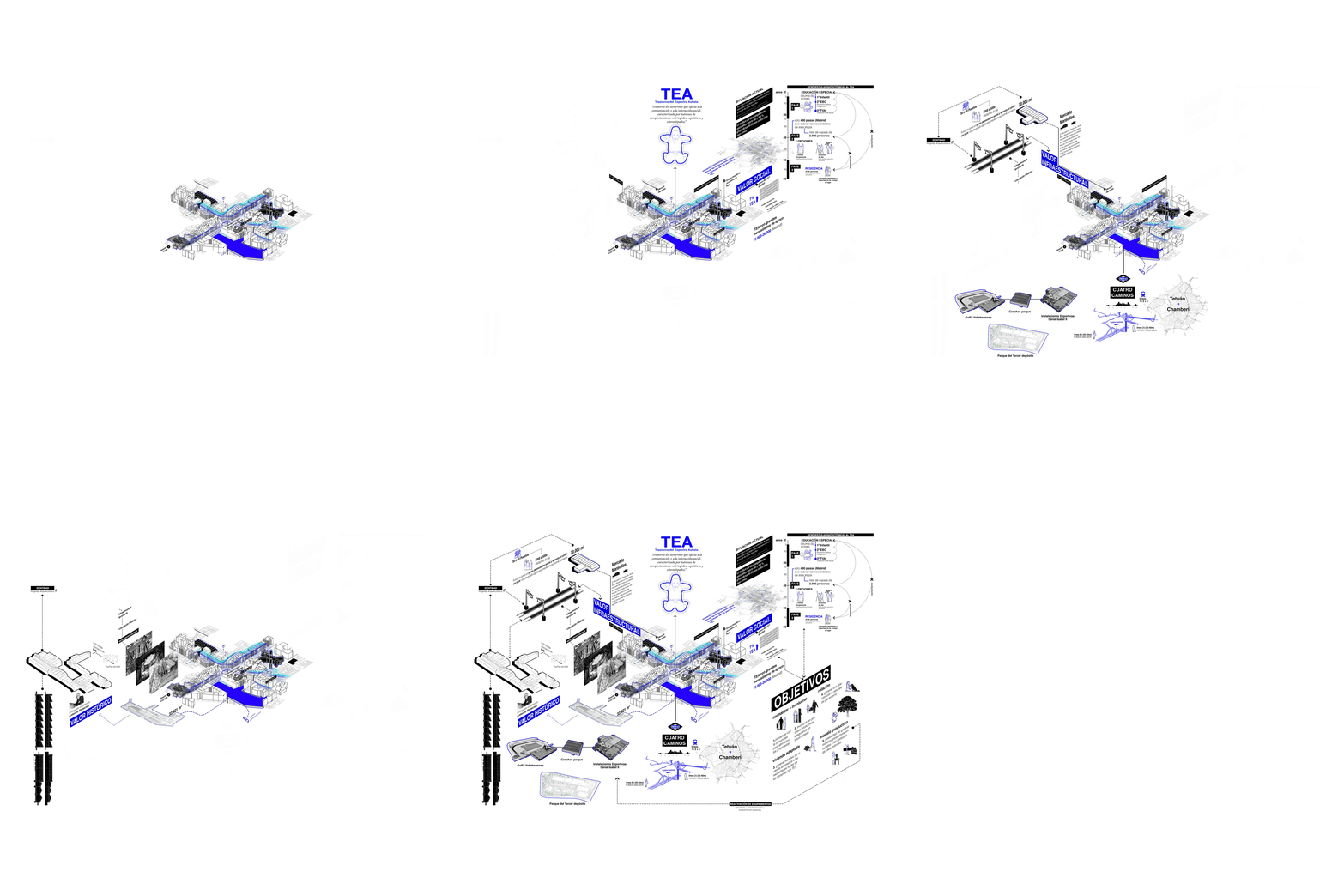
ParkTEA is therefore based on three complementary values: the social value of including people with autism in urban life; the infrastructural value of an equipped, accessible and active environment; and the historical value of recovering a place connected to collective memory. From these values, the project proposes a model of a neurodiverse city, where care spaces are no longer isolated exceptions, but active parts of the urban structure. In this way, what was once a symbol of movement, infrastructure and progress becomes a driver of community, belonging and inclusion.
AWARDS:
-With Honors
-Archdaily Student Project Award
PUBLICATIONS
-Archdaily: https://www.archdaily.com/1041256/parktea-an-archdaily-student-project-awards-winner-reimagining-the-city-for-cognitive-diversity
-La casa de la arquitectura, evento CANTERA
-Conferencia, Universidad Rey Juan Carlos.
-Conferencia, Universidad Alcalá de Henares.