Off the Grid explores the transformation of an obsolete office building at Paseo de la Castellana 130 in Madrid into a new model of collective housing. Emerging from the domestic and urban conditions revealed by the pandemic, the project focuses on two closely related questions: energy autonomy and new forms of inhabitation. If the home had suddenly become workplace, school, gym, meeting room and public space, could architecture move beyond the conventional apartment and become a more flexible, productive and collective system?
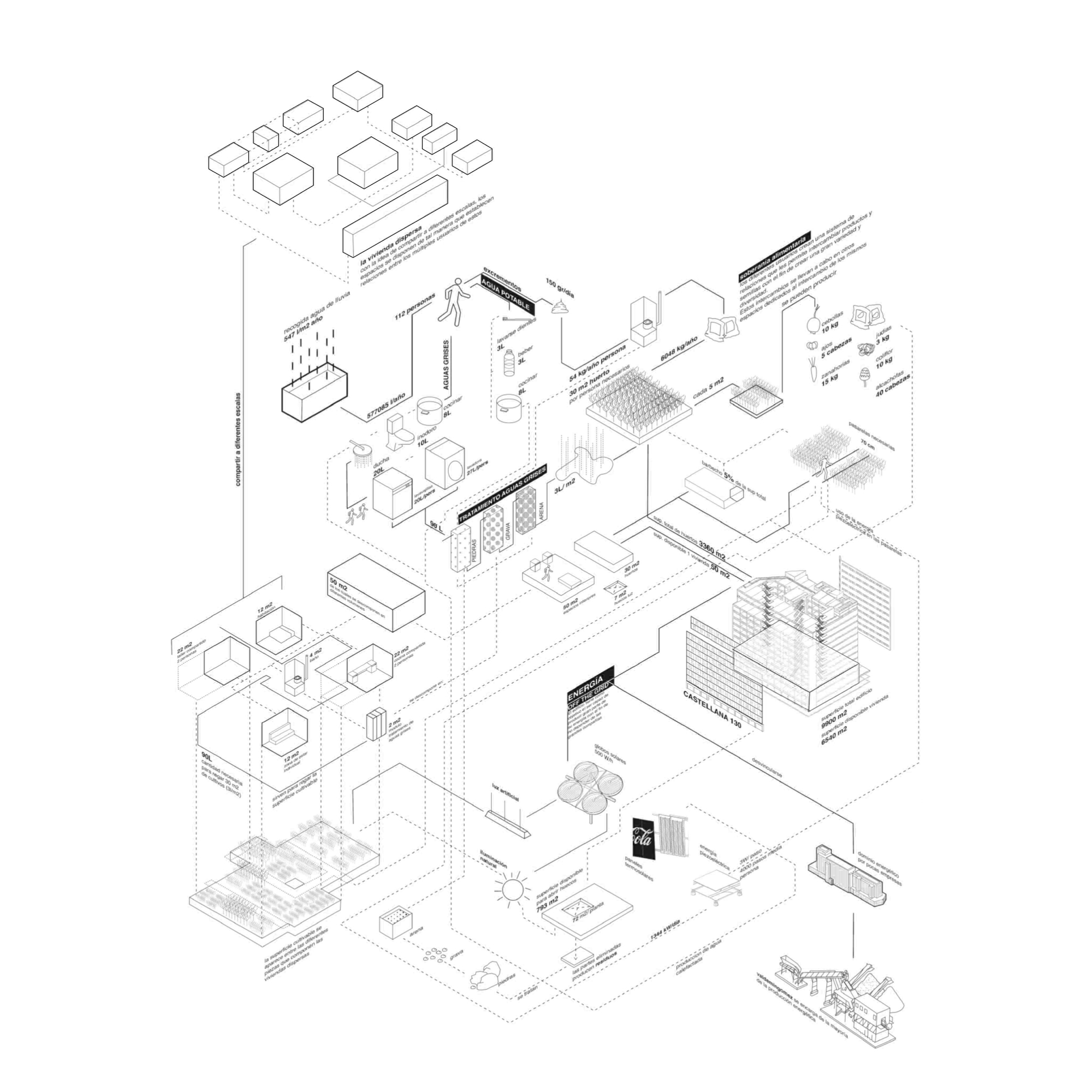
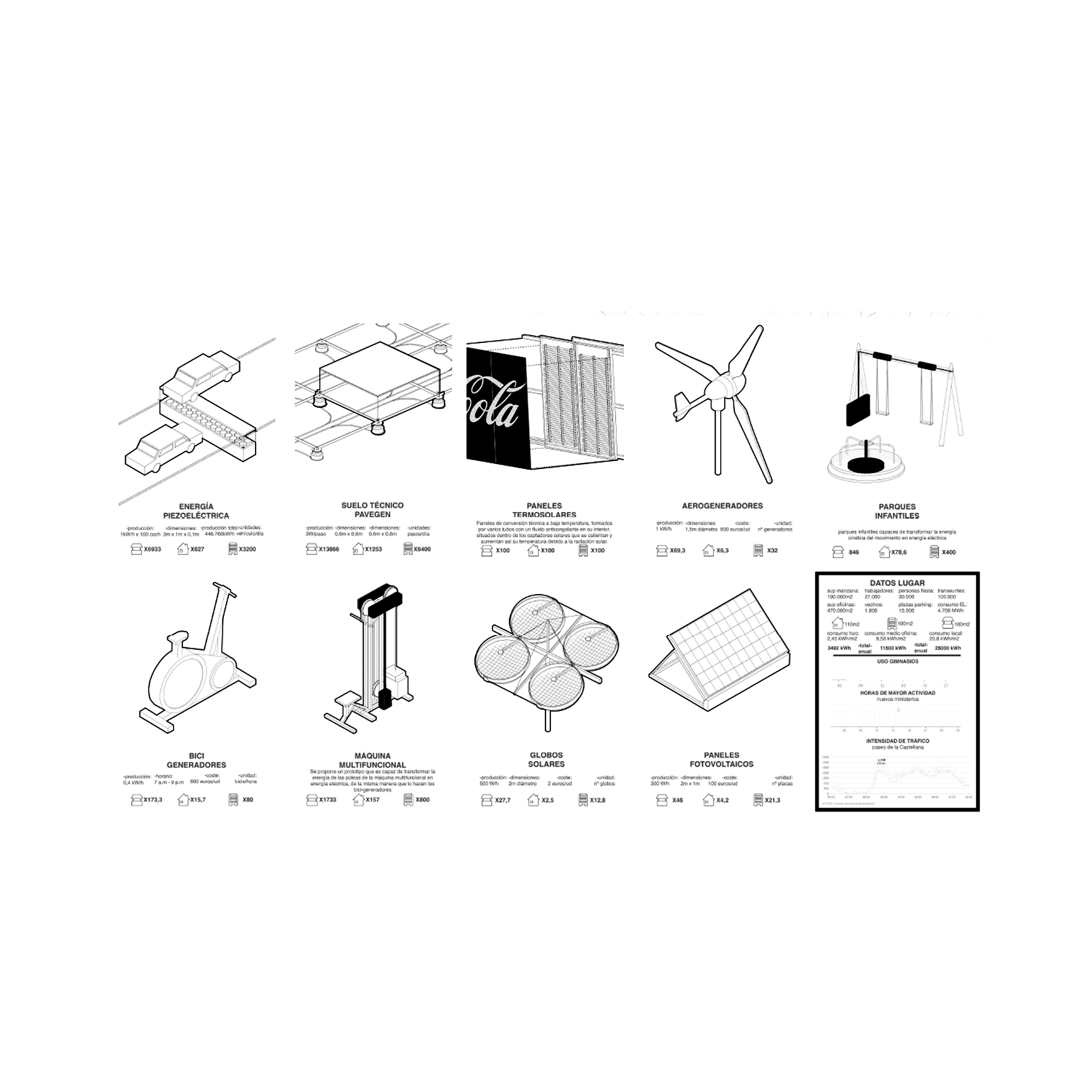
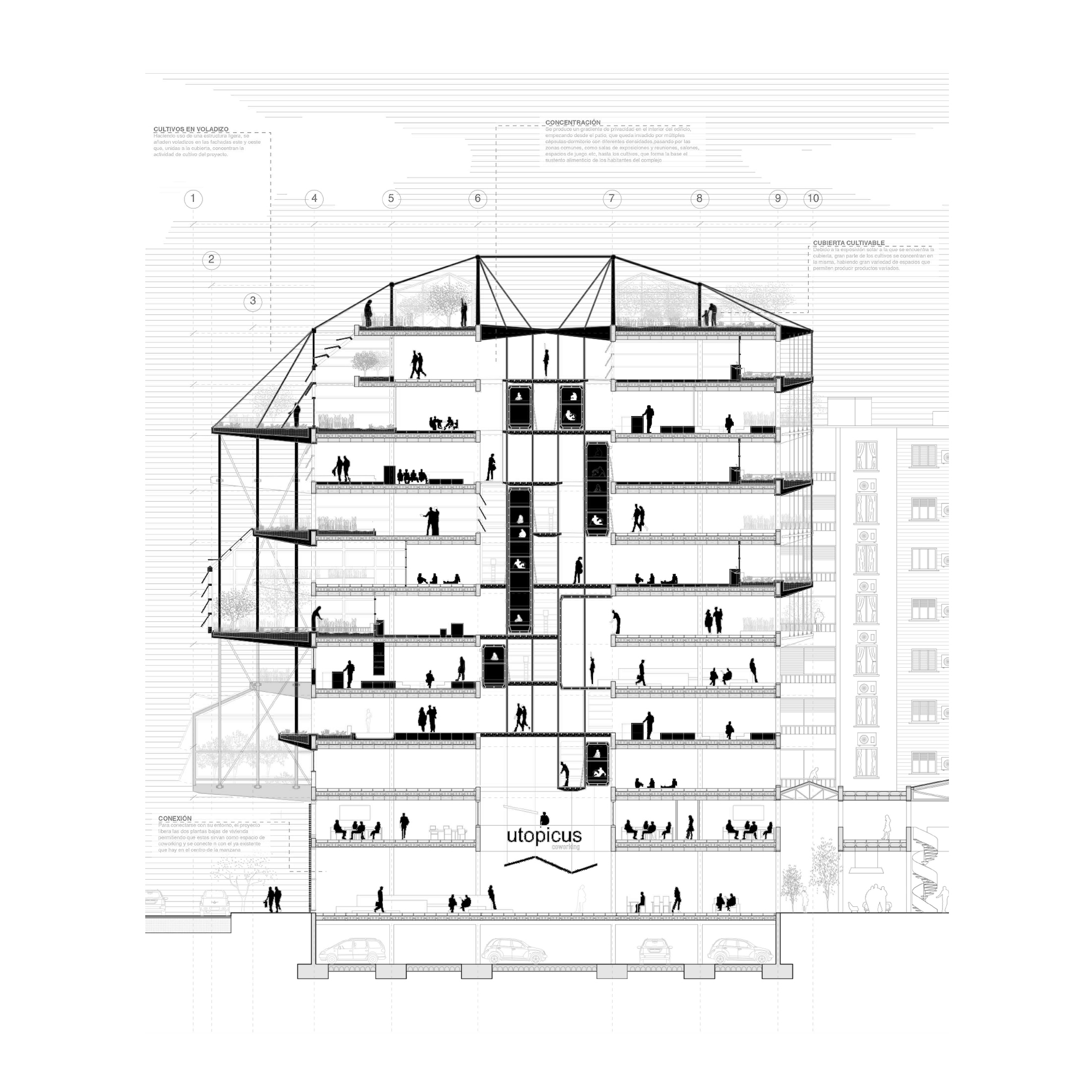
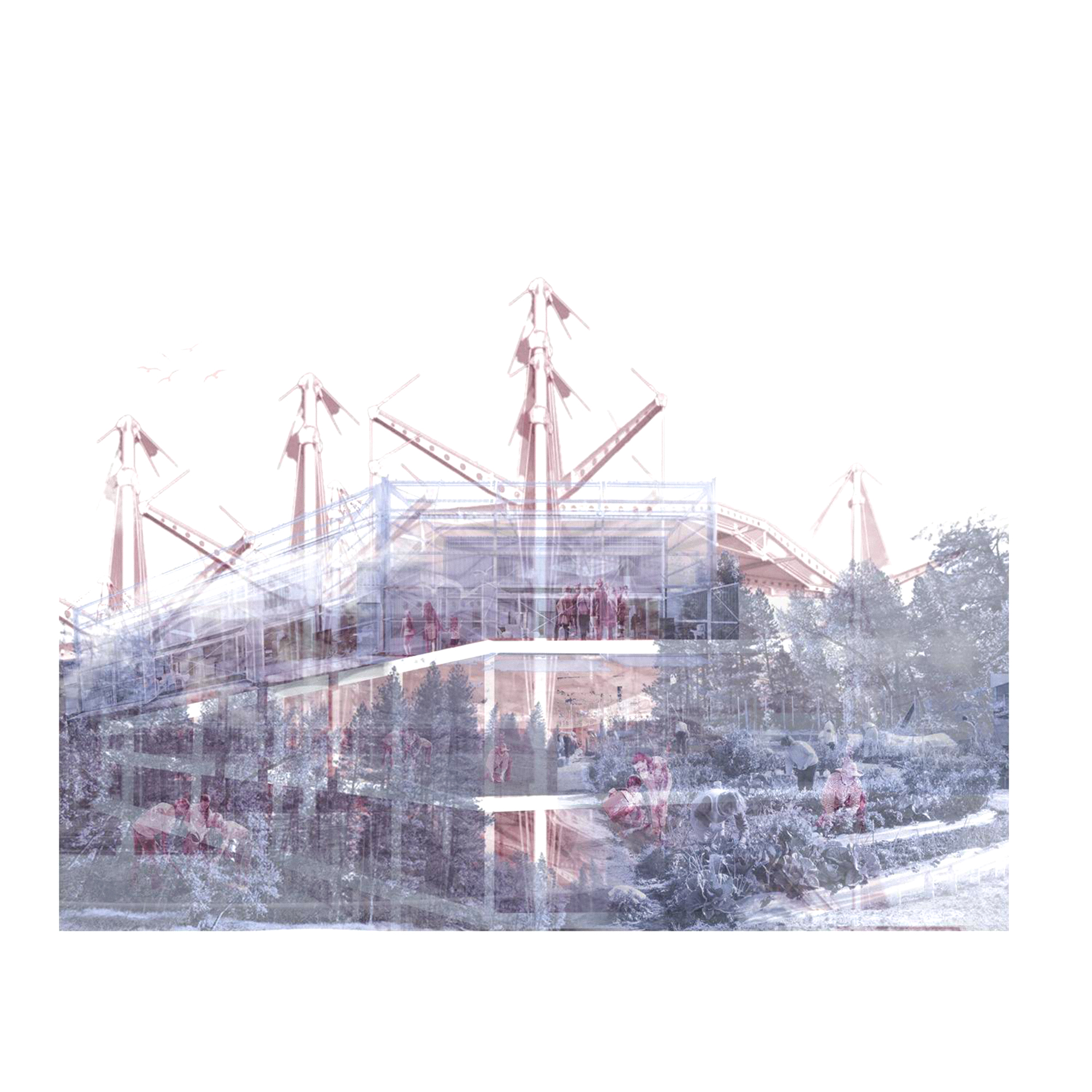
The project proposes converting the existing office block into a self-sufficient community disconnected from the municipal supply network. Rather than demolishing or replacing the building, a new infrastructural layer is superimposed onto it through a system of plug-ins and architectural additions. This framework incorporates renewable energy devices, productive landscapes and resource-recovery systems, turning everyday domestic life into part of a broader metabolic cycle. Piezoelectric systems transform activities such as walking, exercising or using stairs into electrical energy, while wind turbines and solar devices contribute additional renewable production. Dry toilets, greywater reuse, gardens and productive areas further reduce the dependence of the community on external infrastructures.
At the same time, Off the Grid questions the spatial organization of conventional housing. Instead of reproducing a collection of self-contained apartments in which every household privately duplicates the same functions, the project reduces the private realm to those activities that strictly require intimacy. Kitchens, dining rooms, study areas, libraries, gardens and leisure spaces become part of an extensive shared domestic landscape. Housing is therefore understood less as an enclosed unit and more as a network of spaces, resources and relationships.
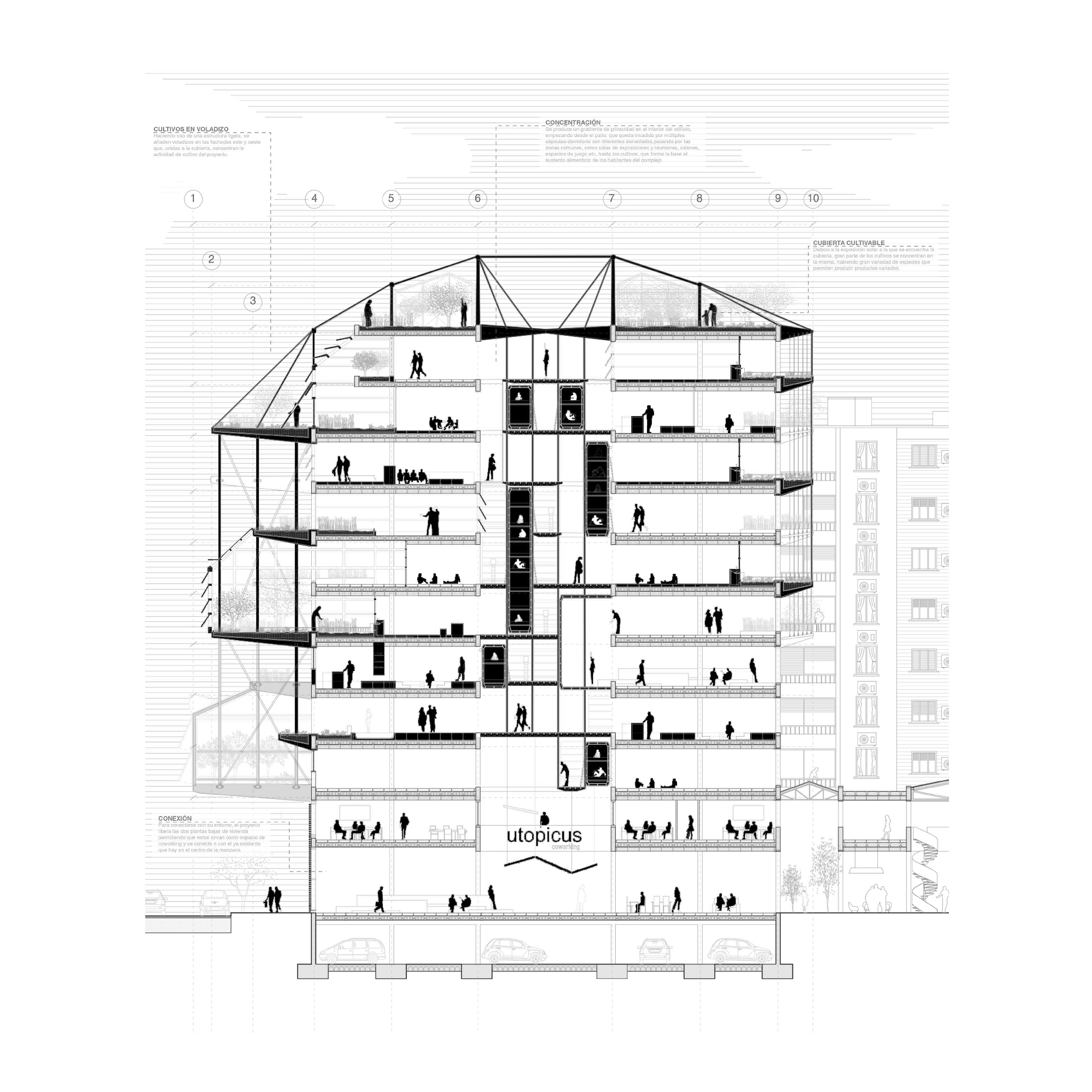
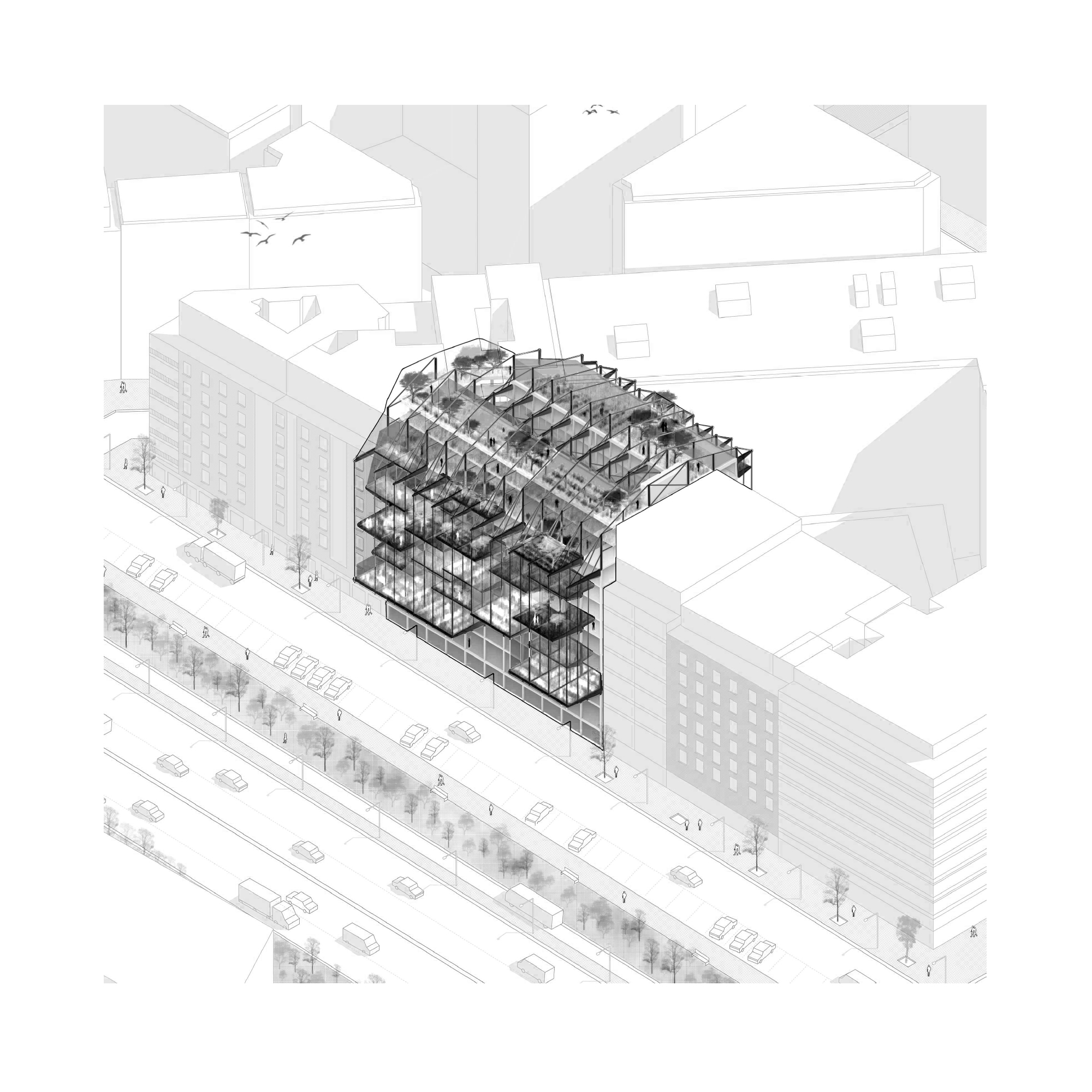
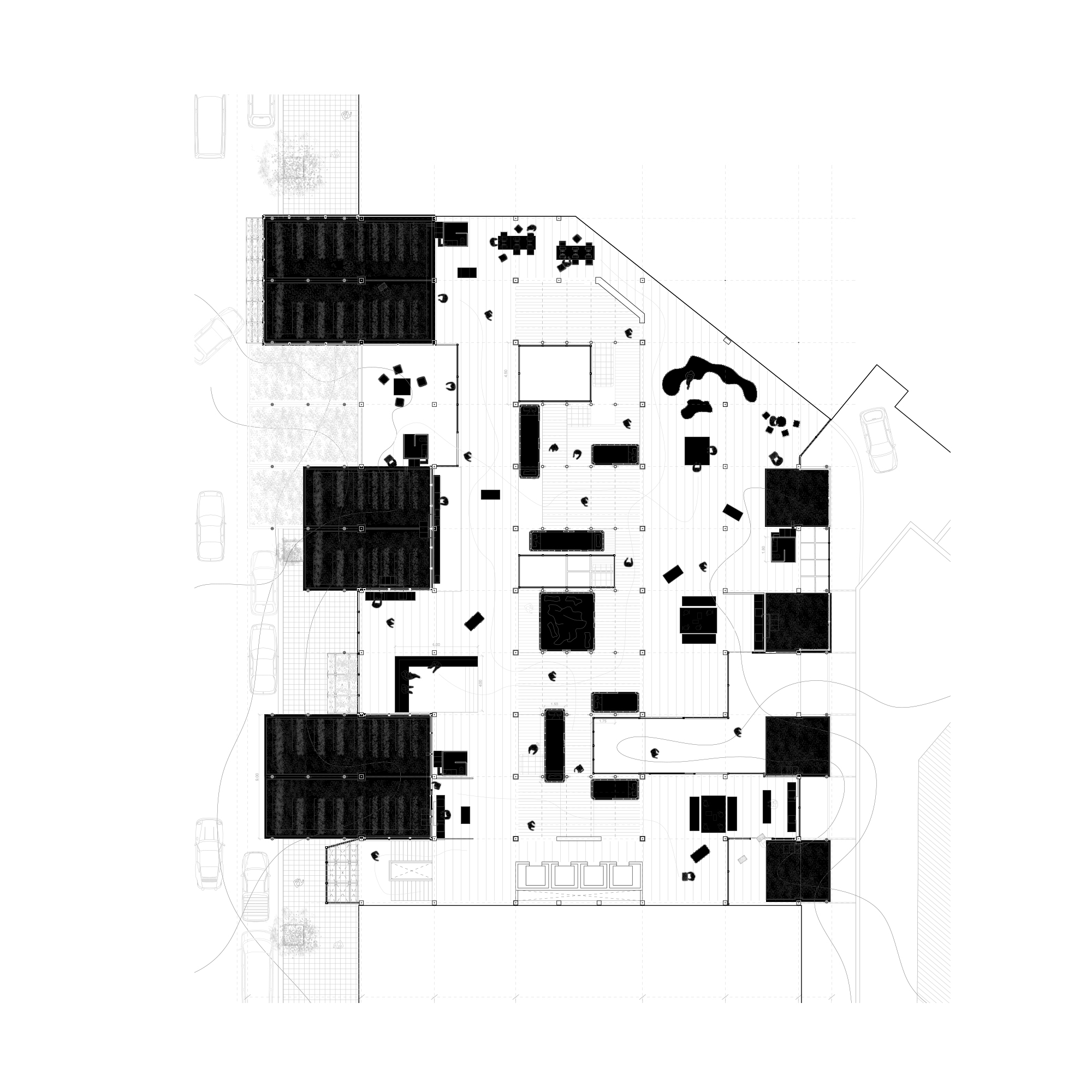
A lightweight infrastructure of steel posts and tension cables extends across the existing building, colonizing both its main façade and central courtyard. Gardens and productive landscapes occupy the exterior, while sleeping cabins and smaller domestic capsules inhabit the inner void. These add-ons allow the existing office structure to accommodate new forms of domesticity without erasing its previous condition, establishing a relationship between permanent structure and adaptable occupation.
Ultimately, Off the Grid proposes a shift from the house as an isolated object to housing as a collective infrastructure. Energy is produced rather than simply consumed, resources circulate instead of being discarded, and spaces once privatized become shared. By overlaying a new domestic ecosystem onto an obsolete office building, the project imagines a city in which architecture depends less on centralized systems and more on the capacity of communities to produce, share and sustain their own environment.